
How to clean Mikimoto pearls? The Safe Luxury Pearl Care Guide
For luxury pearl owners, How to clean Mikimoto pearls is a crucial question. Mikimoto pearls are prized for their luminous luster and delicate nacre, but man...
For luxury pearl owners, How to clean Mikimoto pearls is a crucial question.
Mikimoto pearls are prized for their luminous luster and delicate nacre, but many owners fear cleaning them—worried that harsh products or improper methods will scratch, dull, or damage their precious investment. Unlike durable gemstones like diamonds, pearls are organic and porous, making them vulnerable to chemicals, abrasion, and moisture. This fear leaves many Mikimoto owners unsure how to keep their pearls looking their best, leading to dullness or damage over time. How to clean Mikimoto pearls is a question that demands safe, expert advice to protect their beauty and value. Check the Pandora real jewelry guide to learn how to care for other popular luxury jewelry pieces.
I promise to deliver a clear, step-by-step guide on How to clean Mikimoto pearls, with safe methods, recommended tools, common mistakes to avoid, and long-term care tips. We’ll use gentle, pearl-friendly techniques that preserve their nacre and luster, ensuring your Mikimoto pearls stay radiant for decades.
By the end of this guide, you’ll know exactly How to clean Mikimoto pearls in both daily and deep-cleaning scenarios, which tools to use (and which to avoid), how to fix minor dullness, and how to incorporate cleaning into your regular pearl care routine. You’ll walk away with the confidence to maintain your Mikimoto pearls safely and effectively. For official pearl care guidelines, visit the Gemological Institute of America, and for expert jewelry care tips, explore the JCK Jewelry Magazine.
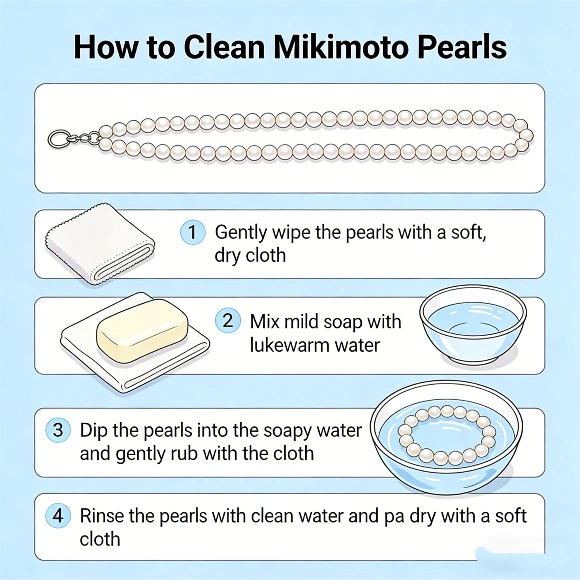
1. Essential Tools to Clean Mikimoto Pearls Safely
Before you learn How to clean Mikimoto pearls, it’s critical to gather the right tools—using the wrong supplies is one of the most common ways owners damage their pearls. The key is to use gentle, non-abrasive, and chemical-free tools that won’t harm the delicate nacre (the outer layer of the pearl that gives it luster).
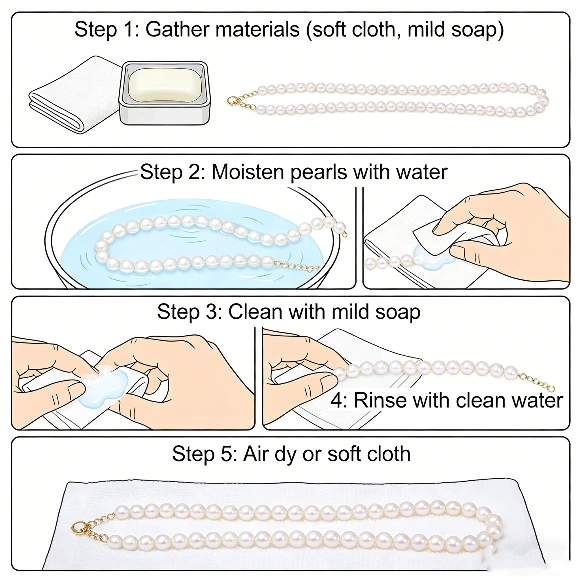
1.1. Recommended Safe Cleaning Tools
The best tools to clean Mikimoto pearls are simple and easy to find at home. You’ll need a soft, lint-free microfiber cloth (avoid cotton or paper towels, which can scratch the nacre), a small bowl of lukewarm (not hot) distilled water, and a tiny amount of mild, fragrance-free dish soap (like Dawn Free & Clear). For hard-to-reach areas (like between pearls on a strand), use a soft-bristled makeup brush or a clean toothbrush with ultra-soft bristles.
These tools are gentle enough to clean the pearls without damaging them, and they avoid the harsh chemicals that can strip the nacre or cause discoloration. Having these tools ready ensures you can clean your Mikimoto pearls properly every time you need to, making How to clean Mikimoto pearls a straightforward process.
1.2. Tools & Products to Avoid
When learning How to clean Mikimoto pearls, it’s just as important to know what to avoid as what to use. Never use harsh chemicals like ammonia, bleach, or jewelry cleaning solutions (even those labeled “safe for pearls”)—these can dissolve the nacre and permanently damage your pearls. Avoid abrasive materials like scrub sponges, toothpicks, or steel wool, which scratch the surface and dull the luster.
Also, steer clear of hot water, as extreme temperatures can cause the nacre to crack or peel. Even ultrasonic cleaners, which are safe for many gemstones, are dangerous for Mikimoto pearls—they can loosen the pearls from their settings and damage the nacre. To understand the difference between delicate pearl care and more durable jewelry, read the costume jewelry guide.
2. Step-by-Step Guide: How to clean Mikimoto pearls
Now that you have the right tools, it’s time to learn the exact steps for How to clean Mikimoto pearls. This process works for all Mikimoto pearl pieces—strands, earrings, pendants, and bracelets—and is safe for both Akoya and South Sea pearls. The process is gentle, takes just 5-10 minutes, and ensures your pearls stay luminous.
2.1. Daily Cleaning (After Each Wear)
The easiest way to keep your Mikimoto pearls clean is to do a quick daily cleaning after each wear. This prevents dirt, oils, and makeup from building up on the nacre, which can cause dullness over time. To do this, simply take your soft microfiber cloth and gently wipe each pearl, including the settings, to remove any surface residue.
This quick step takes less than a minute and is the most effective way to maintain your pearls’ luster. It’s a simple part of How to clean Mikimoto pearls that requires no water or soap—just a gentle wipe. For pieces with gold settings, you can also use a soft cloth to polish the metal, but be careful not to rub the pearls too hard. To verify the quality of your Mikimoto’s gold settings, use the real gold test guide.
2.2. Deep Cleaning (Every 1-2 Months)
For a more thorough clean, deep clean your Mikimoto pearls every 1-2 months, especially if you wear them frequently. Start by filling a small bowl with lukewarm distilled water and adding a drop of mild dish soap. Stir gently to create a mild solution—never use more soap than needed, as excess soap can leave a residue.
Dip your soft cloth or soft-bristled brush into the solution, wring out excess water (the cloth should be damp, not soaking), and gently wipe each pearl. For strands, clean between the pearls with the brush to remove any trapped dirt. After cleaning, rinse the cloth with clean lukewarm water and wipe the pearls again to remove soap residue. Pat dry immediately with a clean, dry microfiber cloth—never let the pearls air dry, as moisture can seep into the settings and damage the thread or metal. For a look at how to care for alternative jewelry materials, check the gold filled jewelry guide.
3. Common Mistakes to Avoid When Cleaning Mikimoto Pearls
Even with the right steps, many owners make mistakes when learning How to clean Mikimoto pearls—mistakes that can damage their pearls irreparably. Being aware of these common errors will help you protect your investment and keep your pearls looking their best for years.
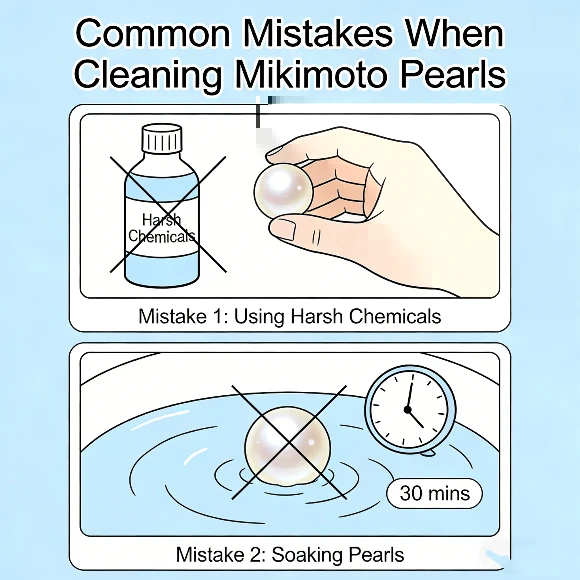
3.1. Using Harsh Chemicals or Abrasives
As mentioned earlier, harsh chemicals and abrasive materials are the biggest enemies of Mikimoto pearls. Many owners mistakenly use jewelry cleaning sprays or wipes, which contain ammonia or other chemicals that eat away at the nacre. Others use rough cloths or scrub brushes, which scratch the surface and dull the luster.
These mistakes are easy to avoid once you know better—stick to the gentle tools and mild soap recommended earlier, and never use anything that could scratch or chemically damage the pearls. This is a critical part of How to clean Mikimoto pearls, as even one use of harsh products can permanently ruin your pearls.
3.2. Soaking or Air-Drying Pearls
Another common mistake is soaking Mikimoto pearls in water or letting them air dry. Pearls are porous, so soaking them can cause water to seep into the nacre, leading to discoloration, cracking, or peeling. Air-drying can also cause moisture to build up in the settings, damaging the thread (for strands) or causing the metal to tarnish.
When cleaning, always use a damp (not wet) cloth, and pat dry immediately with a dry cloth. Never soak your pearls, and never leave them wet for more than a minute. This simple rule will prevent a lot of unnecessary damage and is key to How to clean Mikimoto pearls safely.
4. Long-Term Care Tips to Preserve Mikimoto Pearls
Cleaning your Mikimoto pearls is just one part of maintaining their beauty—incorporating long-term care habits will ensure they stay radiant for decades. These tips complement your cleaning routine and help protect your pearls from damage when they’re not being worn.
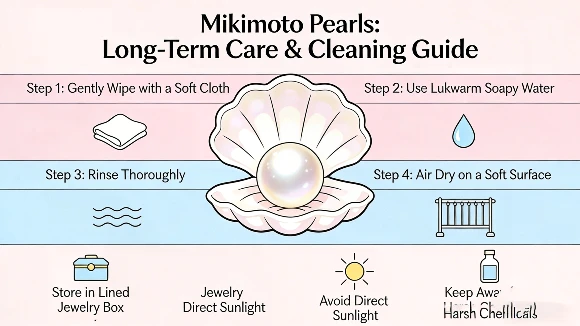
4.1. Proper Storage & Handling
When you’re not wearing your Mikimoto pearls, store them properly to avoid scratches and damage. Keep them in a soft, fabric-lined jewelry box or a breathable pouch—never store them with other jewelry (like diamonds or metal pieces), which can scratch the pearls. Avoid storing them in direct sunlight or humid areas (like bathrooms), as sunlight can fade the nacre and humidity can cause discoloration.
Also, handle your pearls with clean hands—oils and dirt from your skin can build up on the nacre over time. If you wear makeup, perfume, or hairspray, apply these products before putting on your pearls to avoid getting chemicals on them. This is an important part of How to clean Mikimoto pearls, as prevention is easier than fixing damage. To compare with another luxury brand’s care practices, read the Mejuri real gold guide.
4.2. Regular Professional Maintenance
Even with proper at-home cleaning, it’s a good idea to have your Mikimoto pearls professionally cleaned and inspected once a year. Professional jewelers can clean hard-to-reach areas, check the settings for loose pearls, and restring strands if the thread is worn. This helps prevent damage and ensures your pearls stay in top condition.
Mikimoto also offers professional care services for their pearls, which are tailored to their specific quality standards. Taking advantage of these services is a great way to complement your at-home cleaning routine and keep your pearls looking their best. This professional touch is the final step in How to clean Mikimoto pearls and maintain their long-term beauty.
Conclusion
Learning How to clean Mikimoto pearls is simple once you have the right tools, steps, and knowledge of what to avoid. By following the gentle, safe methods outlined in this guide—using mild soap, soft cloths, and avoiding harsh chemicals—you can keep your Mikimoto pearls luminous and beautiful for decades. How to clean Mikimoto pearls doesn’t require expensive products or complicated steps; it just requires care, patience, and consistency.
Remember, Mikimoto pearls are organic and delicate, so gentle cleaning is key. Daily wipes after wear, monthly deep cleans, proper storage, and annual professional maintenance will ensure your pearls retain their luster and value. Whether you own a classic Akoya strand or a unique Mikimoto pendant, these cleaning and care tips will help you protect your investment and enjoy your pearls for years to come.
The answer to How to clean Mikimoto pearls is clear: keep it gentle, avoid harsh products, and make cleaning a regular part of your pearl care routine. With these steps, your Mikimoto pearls will remain a timeless, radiant addition to your jewelry collection.
Related Reading
For insights into another luxury brand’s material care and quality, check the Mejuri real gold guide. For tips on verifying the quality of gold settings (critical for Mikimoto pearl pieces), revisit the real gold test guide.
- Is it cheaper to buy Mikimoto pearls in Japan? A Complete Price Guide - Post Date: 2026-04-02
- How much is the Mikimoto crown? The Ultimate Luxury Crown Price Guide - Post Date: 2026-04-02
- Does Mikimoto ever go on sale? The Truth About Luxury Pearl Discounts - Post Date: 2026-04-02
- Is Mikimoto cheaper in Japan? A Complete Price Comparison Guide - Post Date: 2026-04-02
- Why are Mikimoto pearls so expensive? The Luxury Pearl Price Breakdown - Post Date: 2026-04-02
- How much are Mikimoto pearls worth? A Complete Value Breakdown - Post Date: 2026-04-02
- Are Mikimoto pearls valuable? A Complete Guide to Their Worth - Post Date: 2026-04-02
- Are Mikimoto pearls worth it? The Ultimate Luxury Pearl Investment Guide - Post Date: 2026-04-02
- Why are Mikimoto so expensive? The Iconic Luxury Pearl Legacy - Post Date: 2026-04-01
- How to spot fake mikimoto pearls - Post Date: 2026-03-24
- Why is Cartier so expensive?What is special about Cartier? - Post Date: 2026-03-15
- skyworth tv is what brand?skyworth tv is it easy to use for? - Post Date: 2026-03-11
- Why is Van Cleef so expensive?Is Cartier or Van Cleef cheaper? - Post Date: 2026-03-17
- Why is Graff so expensive?Is Graff a high-end jewelry brand? - Post Date: 2026-03-18
- Is Cartier worth the money?Which is more expensive cartier or bvlgari jewelry? - Post Date: 2026-03-17
- 925 Silver vs Stainless Steel Jewelry - Post Date: 2026-03-20
- Is Bulgari a Luxury Brand?Is Bulgari higher than Cartier? - Post Date: 2026-03-18
- Why is Tiffany so expensive now?Is Tiffany considered a luxury brand? - Post Date: 2026-03-17
- Dreame brand is from which country?Is Dreame owned by Xiaomi? - Post Date: 2026-03-15
- How does the Pigeon brand ensure product safety - Post Date: 2026-03-17
- Is it cheaper to buy Mikimoto pearls in Japan? A Complete Price Guide - Post Date: 2026-04-02
- How much is the Mikimoto crown? The Ultimate Luxury Crown Price Guide - Post Date: 2026-04-02
- Does Mikimoto ever go on sale? The Truth About Luxury Pearl Discounts - Post Date: 2026-04-02
- Is Mikimoto cheaper in Japan? A Complete Price Comparison Guide - Post Date: 2026-04-02
- Why are Mikimoto pearls so expensive? The Luxury Pearl Price Breakdown - Post Date: 2026-04-02
- How much are Mikimoto pearls worth? A Complete Value Breakdown - Post Date: 2026-04-02
- Are Mikimoto pearls valuable? A Complete Guide to Their Worth - Post Date: 2026-04-02
- Are Mikimoto pearls worth it? The Ultimate Luxury Pearl Investment Guide - Post Date: 2026-04-02
- Why are Mikimoto so expensive? The Iconic Luxury Pearl Legacy - Post Date: 2026-04-01
- What is the history of TASAKI? 2026 Complete Guide to the Japanese Pearl Brand - Post Date: 2026-04-01