Is Bulgari a Luxury Brand?Is Bulgari higher than Cartier?
Is Bulgari a Luxury Brand?Yes,Bulgari is a globally recognized top-tier luxury brand.Is Bulgari higher than Cartier?Both belong to the highest tier of global luxury jewelry;neither is superior to the other.
Is Bulgari a Luxury Brand?Yes,Bulgari is a globally recognized top-tier luxury brand.Is Bulgari higher than Cartier?Both belong to the highest tier of global luxury jewelry;neither is superior to the other.
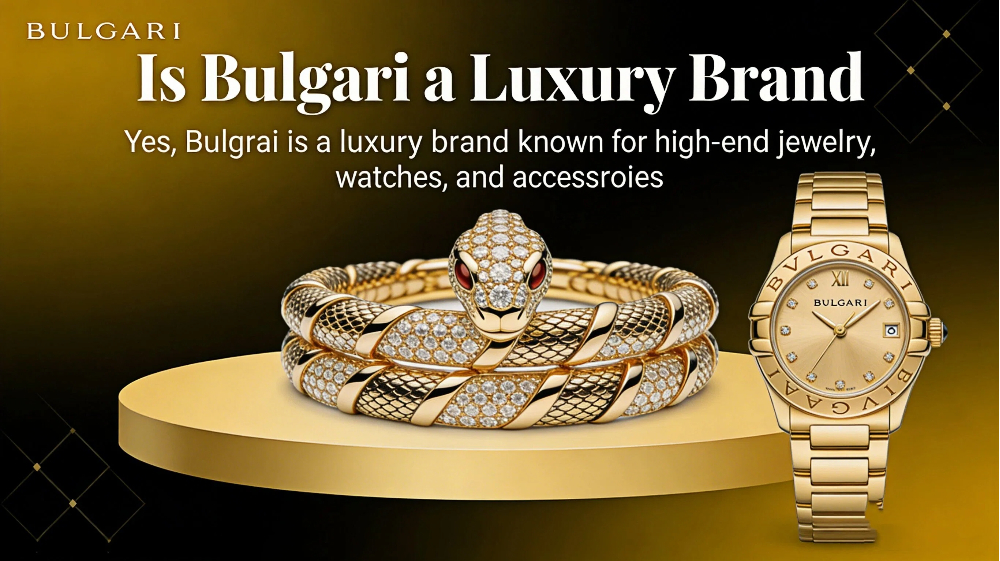
1.Is Bulgari a Luxury Brand?
Bulgari is a globally recognized top-tier luxury brand,one of the“World’s Top Three Jewelers”alongside Cartier and Van Cleef&Arpels.It is a century-old luxury giant covering high jewelry,fine watchmaking,luxury leather goods,fragrances,and luxury hotels.It is by no means a contemporary or fashion brand,and firmly ranks in the highest tier of the global luxury industry.
1.1.Century-old Roman royal heritage,irreplicable brand DNA
Founded in Rome,Italy,in 1884 by Greek silversmith Sotirio Bulgari,the brand has over 140 years of luxury history.From its early days,it became the official jeweler of the Italian royal family and European aristocracy,making it the only Italian luxury brand capable of competing with century-old French jewelry houses.
It broke the traditional European focus on diamonds and symmetrical designs.Drawing inspiration from Roman architecture,Greek sculptures,and Renaissance art,Bulgari pioneered a unique color gemstone aesthetic and is known worldwide as the King of Colored Gemstones.This design identity rooted in Roman culture is a core barrier no other brand can replicate.
1.2.Leading expertise in core categories,the foundation of luxury status
While most fashion brands succeed in only one category,Bulgari achieves world-class excellence in both high jewelry and fine watchmaking,with a full-range luxury portfolio that sets it apart from ordinary fashion brands.
1.2.1.High jewelry foundation:the unrivaled King of Colored Gemstones
Bulgari is one of the rule‑setters in the global colored gemstone market,with industry‑leading gemstone standards:
It uses only unheated or minimally heated,top‑color collectible gemstones,including Pigeon’s Blood rubies,Royal Blue/Cornflower Blue sapphires,Muzo green emeralds,and Paraíba tourmalines.Its patented cabochon cut maximizes color and luster,making Bulgari the first brand to elevate colored gemstones to the same status as diamonds.
Iconic lines including Serpenti,Divas’Dream,and B.Zero1 are among the most recognizable designs in global jewelry.Its high jewelry collections are frequently worn on the Oscars and Cannes red carpets,and are beloved by legends such as Elizabeth Taylor.One-of-a-kind high jewelry pieces range from millions to hundreds of millions of RMB,matching the level of Cartier and Van Cleef&Arpels.
1.2.2.Fine watchmaking:not a fashion watch,but genuine Swiss haute horlogerie
Many people mistakenly think Bulgari only makes jewelry watches.In reality,it entered watchmaking in 1930 and launched its first in‑house movement in 1975.It owns a dedicated manufacture in the Vallée de Joux,Switzerland,and is a fully independent Swiss watchmaker.
The iconic Octo collection holds 10 world records for ultra-thin movements.Many pieces carry the Poinçon de Genève(Geneva Seal),the highest certification in Swiss watchmaking,with complications including tourbillon,perpetual calendar,and minute repeater.Its watchmaking level competes with Jaeger-LeCoultre and Blancpain.The Serpenti watch is one of the most famous jewelry watches in the world.
1.2.3.Full-range luxury ecosystem,unmatched brand influence
Bulgari is the most successful luxury jewelry brand in multi-category expansion.Beyond jewelry and watches,its leather goods,fragrances,and accessories are all luxury-tier.It also operates Bulgari Hotels&Resorts,a benchmark in ultra-luxury hospitality,located only in top districts of New York,Paris,Shanghai,and Beijing.This full lifestyle positioning further strengthens its luxury status.
1.3.Endorsed by global elites for a century,a universal symbol of luxury
From European royalty to modern billionaires and Hollywood celebrities,Bulgari has long been the choice of the world’s elite.Elizabeth Taylor was one of its most famous collectors,and her Bulgari emerald set set auction records.
It is a staple at the Oscars and Cannes,and a top choice for royal families and first ladies worldwide.Wearing Bulgari is an internationally recognized symbol of wealth,taste,and status.
1.4.Clear pricing structure,consistent with top luxury standards
Official China retail prices for 2026:
Entry level:Save the Children charity necklaces/earrings,¥10,000–30,000;basic quartz watches from¥30,000–50,000
Core collections:Serpenti,B.Zero1 rings,bracelets,necklaces¥50,000–500,000;mechanical watches¥50,000–300,000
High jewelry&complications:millions to hundreds of millions RMB,available only to VIP clients
2.Is Bulgari higher than Cartier?
By official industry positioning,history,and global luxury consensus,both brands belong to the absolute top tier of luxury jewelry,as two of the“Big Three Jewelers”(with Van Cleef&Arpels).Neither is definitively“higher”than the other.They simply excel in different areas:Cartier is stronger in heritage,formality,and watchmaking;Bulgari leads in colored gemstones,artistic design,and lifestyle.
2.1.Situations where Cartier feels more luxurious
You want a globally universal symbol of ultimate luxury.Cartier is known as“the Jeweler of Kings,the King of Jewelers,”with unmatched royal and political credibility.
You value traditional fine watchmaking and men’s luxury.Cartier pioneered modern wristwatches,with stronger in-house movements and a more complete men’s collection.
You prioritize resale value and liquidity.Cartier’s LOVE,Juste un Clou,and Tank lines have 10–20%better retention than Bulgari overall.
You prefer timeless,versatile,understated luxury suitable for business,formal,and daily wear.
2.2.Situations where Bulgari feels more luxurious
You want top-tier colored gemstones and collectibility.As the King of Colored Gemstones,Bulgari outperforms Cartier in gem quality,cutting,and design.
You want bold,artistic,highly recognizable design.Bulgari’s dramatic,architectural style stands out far more on red carpets and formal occasions.
You want a complete luxury lifestyle.Bulgari Hotels,leather goods,and fragrances create a full-circle luxury experience that Cartier does not offer.
You prefer feminine,expressive,emotional design.Bulgari’s Serpenti and Divas’Dream resonate deeply with female audiences,representing independence,glamour,and confidence.
2.3.Common misconceptions clarified
Myth 1:Bulgari has entry-level pieces around¥10,000,so it is less luxurious.
Fact:Entry lines are for brand accessibility.Luxury status is defined by high jewelry and watchmaking.Both brands’top lines are equally elite.
Myth 2:Cartier is“too popular”and less exclusive than Bulgari.
Fact:High recognition is proof of luxury leadership,not inferiority.Like Rolex,popularity does not reduce top-tier status.Luxury is defined by craftsmanship,heritage,and authority,not rarity.
Myth 3:Cartier belongs to Richemont,Bulgari to LVMH,so one is superior.
Fact:Both groups are the world’s largest luxury conglomerates.Cartier and Bulgari are each their group’s flagship jewelry brand.Group ownership does not change their equal luxury ranking.
- How does Fred jewelry compare to Cartier? 2026 Luxury Jewelry Showdown - Post Date: 2026-04-01
- Does Cartier Jewelry Hold Its Value Well? Full Resale & Investment Guide - Post Date: 2026-03-29
- How to put on cartier love bracelet - Post Date: 2026-03-24
- Do cartier bracelets scratch - Post Date: 2026-03-24
- Where are cartier glasses made - Post Date: 2026-03-24
- How to unscrew cartier love bracelet - Post Date: 2026-03-23
- What country is Bvlgari from?Is Bulgari a subsidiary of Louis Vuitton? - Post Date: 2026-03-19
- Which is more luxury Cartier or Tiffany - Post Date: 2026-03-19
- What is the cheapest jewelry at Cartier - Post Date: 2026-03-19
- What is the most expensive Cartier jewelry - Post Date: 2026-03-19
- Why is Cartier so expensive?What is special about Cartier? - Post Date: 2026-03-15
- skyworth tv is what brand?skyworth tv is it easy to use for? - Post Date: 2026-03-11
- Why is Van Cleef so expensive?Is Cartier or Van Cleef cheaper? - Post Date: 2026-03-17
- Why is Graff so expensive?Is Graff a high-end jewelry brand? - Post Date: 2026-03-18
- Is Cartier worth the money?Which is more expensive cartier or bvlgari jewelry? - Post Date: 2026-03-17
- 925 Silver vs Stainless Steel Jewelry - Post Date: 2026-03-20
- Is Bulgari a Luxury Brand?Is Bulgari higher than Cartier? - Post Date: 2026-03-18
- Why is Tiffany so expensive now?Is Tiffany considered a luxury brand? - Post Date: 2026-03-17
- Dreame brand is from which country?Is Dreame owned by Xiaomi? - Post Date: 2026-03-15
- How does the Pigeon brand ensure product safety - Post Date: 2026-03-17
- Fred Force 10 Bracelet Guide: Sizing, Price & Vintage Options - Post Date: 2026-04-05
- Is David Morris a luxury brand? Timeless Craftsmanship That Defines Elite Luxury - Post Date: 2026-04-04
- Who is the designer of Belperron jewelry? The Visionary Who Redefined Luxury - Post Date: 2026-04-04
- What makes Belperron jewelry unique? Fascinating Design Secrets Collectors Adore - Post Date: 2026-04-04
- Is Fred Jewelry under LVMH? Clear Ownership & Brand History Guide - Post Date: 2026-04-04
- Why is Boucheron so Expensive? Craftsmanship & Series That Justify the Price - Post Date: 2026-04-04
- Is Boucheron or Mellerio Older? Fascinating Age Comparison of Iconic Brands - Post Date: 2026-04-04
- When was Boucheron Founded? Fascinating Historical Origins Revealed - Post Date: 2026-04-04
- Is Boucheron a Luxury Brand? Expert Verdict & Analysis - Post Date: 2026-04-04
- Is Damiani a Luxury Brand? A Complete Expert Analysis - Post Date: 2026-04-04