
Do cartier watches hold their value
Do Cartier watches hold their value? Learn about resale rates, best models, factors that affect value, and how to maximize your Cartier watch’s worth.
Many luxury watch buyers ask one key question: Do Cartier watches hold their value? The short answer is yes—Cartier watches maintain very strong resale value, with popular classic models keeping 65% to 90% of their original retail price on the secondary market. Some limited‑edition, vintage, and gold pieces even rise in value over time. This guide explains which models hold value best, what affects resale price, and how to maximize your watch’s worth.
Cartier combines Swiss watchmaking, timeless design, and luxury jewelry heritage, making its watches highly desirable worldwide. Strong global demand means consistent resale performance compared to most fashion and luxury watch brands.
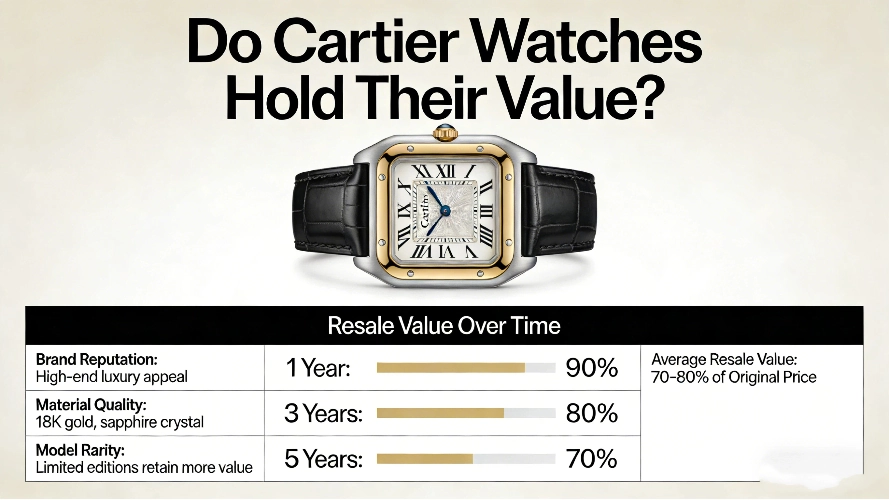
Do Cartier Watches Hold Their Value: Short Answer
Yes, Cartier watches hold their value very well. Most popular steel models retain 65%–85% of retail price, while gold and limited editions hold 75%–90%. Vintage and rare pieces often appreciate, making Cartier a top choice for buyers who want both style and strong resale value.
Unlike many luxury goods that drop sharply after purchase, Cartier’s iconic designs and brand power keep demand high year after year.
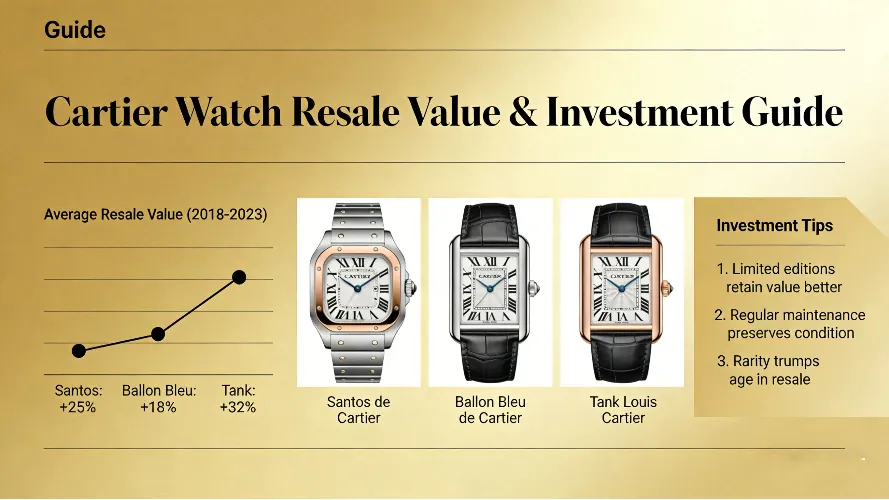
Top Cartier Watches That Hold Value Best
These collections have the strongest resale performance in the pre‑owned market:
Santos de Cartier: Strong demand and classic design deliver excellent value retention
Tank series: Timeless shape, high collectability, and consistent resale demand
Ballon Bleu de Cartier: Popular worldwide, holds value reliably across sizes
These models stay in demand because of their recognizable design, long production history, and broad buyer appeal.
Key Factors That Affect Cartier Watch Value
Material: Gold and precious metal pieces hold value better than steel
Movement: Automatic mechanical watches outperform quartz models
Condition: Mint, unscratched, and well‑maintained watches sell for more
Box & papers: Original packaging and documents significantly boost resale price
Model rarity: Limited editions and discontinued references hold value best
Keeping your watch in good condition and retaining full paperwork will help you maintain the highest possible resale value.
How Cartier Compares to Other Luxury Watch Brands
Cartier offers stronger value retention than most fashion‑focused luxury brands. While top Rolex sports models hold slightly more value, Cartier matches or beats many other premium Swiss watch brands in resale performance.
Cartier’s dual strength in watches and fine jewelry gives it stable, cross‑market demand that supports long‑term value. Cartier’s iconic designs offer consistent value across watches and jewelry.
Do Cartier Watches Appreciate or Depreciate?
Most Cartier watches depreciate slightly after purchase but stabilize quickly. Popular steel models hold most of their value, while gold, vintage, and limited pieces can appreciate over 5–10 years.
Quartz and less common models have milder resale performance but still hold value better than typical luxury accessories.
Tips to Maximize Your Cartier Watch Resale Value
Keep original box, warranty card, receipts, and paperwork
Avoid polishing or replacing original parts
Service your watch only at official Cartier centers
Choose popular models instead of rare or niche versions
Store carefully to avoid scratches and damage
Small steps in care and maintenance can add hundreds or thousands to your final resale price. Rare and premium Cartier pieces often have the strongest long‑term value.
Final Thoughts: Do Cartier Watches Hold Their Value
To sum up: Yes, Cartier watches hold their value very well. Popular models like Santos, Tank, and Ballon Bleu keep 65%–90% of retail price, with rare and gold pieces often gaining value.
If you want a luxury watch that combines elegant design, Swiss quality, and strong resale performance, Cartier is an excellent choice. Its long‑standing brand legacy and timeless design ensure consistent demand in the secondary market.
Top luxury brands use similar craftsmanship and branding to maintain high product value.
- Fred Force 10 Bracelet Guide: Sizing, Price & Vintage Options - Post Date: 2026-04-05
- Is Gorjana Jewelry Good Quality? Full Honest Review 2026 - Post Date: 2026-03-31
- Is Mejuri or Gorjana Better? 2026 Honest & Detailed Comparison Guide - Post Date: 2026-03-31
- Is Buccellati a Luxury Brand? The Honest Luxury Status & Heritage Guide - Post Date: 2026-03-30
- Where Can I Buy Van Cleef and Arpels Jewelry? The Ultimate Safe Buying Guide - Post Date: 2026-03-29
- What Jewelry Is Suitable for Casual Wear: Easy Stylish Picks - Post Date: 2026-03-28
- What Does 750 Mean on Jewelry: Clear Essential Guide - Post Date: 2026-03-28
- What Is the Best Way to Care for Gold Jewelry: Easy & Effective Guide - Post Date: 2026-03-28
- What Does 585 Mean on Jewelry: Clear & Complete Guide - Post Date: 2026-03-27
- How Do You Know If Gold Jewelry Is Real? Simple & Accurate Tests - Post Date: 2026-03-27
- Why is Cartier so expensive?What is special about Cartier? - Post Date: 2026-03-15
- skyworth tv is what brand?skyworth tv is it easy to use for? - Post Date: 2026-03-11
- Why is Van Cleef so expensive?Is Cartier or Van Cleef cheaper? - Post Date: 2026-03-17
- Why is Graff so expensive?Is Graff a high-end jewelry brand? - Post Date: 2026-03-18
- Is Cartier worth the money?Which is more expensive cartier or bvlgari jewelry? - Post Date: 2026-03-17
- 925 Silver vs Stainless Steel Jewelry - Post Date: 2026-03-20
- Is Bulgari a Luxury Brand?Is Bulgari higher than Cartier? - Post Date: 2026-03-18
- Why is Tiffany so expensive now?Is Tiffany considered a luxury brand? - Post Date: 2026-03-17
- Dreame brand is from which country?Is Dreame owned by Xiaomi? - Post Date: 2026-03-15
- How does the Pigeon brand ensure product safety - Post Date: 2026-03-17
- Fred Force 10 Bracelet Guide: Sizing, Price & Vintage Options - Post Date: 2026-04-05
- Is David Morris a luxury brand? Timeless Craftsmanship That Defines Elite Luxury - Post Date: 2026-04-04
- Who is the designer of Belperron jewelry? The Visionary Who Redefined Luxury - Post Date: 2026-04-04
- What makes Belperron jewelry unique? Fascinating Design Secrets Collectors Adore - Post Date: 2026-04-04
- Is Fred Jewelry under LVMH? Clear Ownership & Brand History Guide - Post Date: 2026-04-04
- Why is Boucheron so Expensive? Craftsmanship & Series That Justify the Price - Post Date: 2026-04-04
- Is Boucheron or Mellerio Older? Fascinating Age Comparison of Iconic Brands - Post Date: 2026-04-04
- When was Boucheron Founded? Fascinating Historical Origins Revealed - Post Date: 2026-04-04
- Is Boucheron a Luxury Brand? Expert Verdict & Analysis - Post Date: 2026-04-04
- Is Damiani a Luxury Brand? A Complete Expert Analysis - Post Date: 2026-04-04