
What is special about Mikimoto pearls? Their Unmatched Excellence
For pearl enthusiasts, What is special about Mikimoto pearls? This guide explores their unmatched quality, artisanal craftsmanship, legacy, and rarity that set them apart from other pearls.
For pearl lovers and collectors, What is special about Mikimoto pearls is a question worth exploring.
With countless pearl brands on the market, it’s easy to wonder what makes Mikimoto stand out—why its pearls are revered as the gold standard of luxury pearls. Many shoppers see pearls as a timeless accessory, but Mikimoto’s offerings feel different: brighter luster, more uniform shape, and a sense of heritage that other brands struggle to match. This curiosity leaves people asking what sets Mikimoto apart, whether it’s the pearls themselves, the craftsmanship, or something deeper. What is special about Mikimoto pearls is a question that deserves a detailed, heartfelt answer to honor the brand’s legacy and the artistry behind each piece. Check the Pandora real jewelry guide to see how other jewelry brands compare in quality and craftsmanship.
I promise to break down exactly what is special about Mikimoto pearls, focusing on their unmatched quality standards, handcrafted artistry, century-old legacy, and exclusive rarity. We’ll dive into the details that make these pearls unique, from cultivation to finishing, so you can fully appreciate their specialness. What is special about Mikimoto pearls is not just one factor, but a perfect blend of excellence that no other brand can replicate.
By the end of this guide, you’ll know what is special about Mikimoto pearls, including their strict quality grading, artisanal craftsmanship, innovative history, and exclusivity. You’ll walk away with a clear understanding of why Mikimoto pearls are considered the finest in the world. For official pearl quality standards that Mikimoto upholds, visit the Gemological Institute of America, and for expert insights into luxury pearl cultivation, explore the JCK Jewelry Magazine.
1. Unmatched Quality: The Core of What Makes Mikimoto Pearls Special
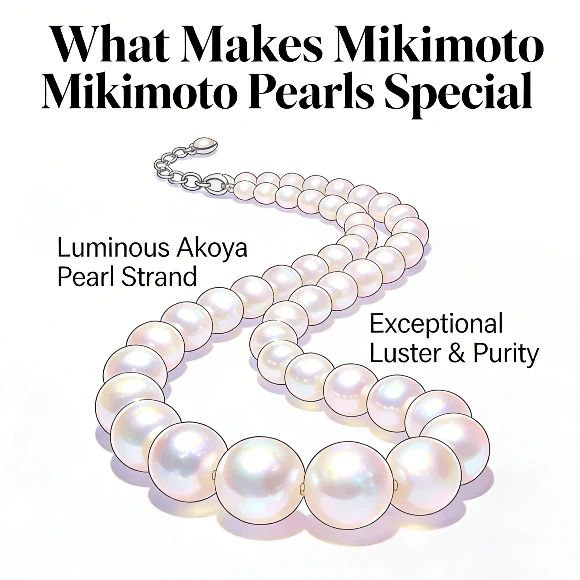
The first thing that makes Mikimoto pearls special is their uncompromising commitment to quality—standards so strict that less than 5% of harvested pearls meet their criteria. This dedication to perfection ensures that every Mikimoto pearl is luminous, uniform, and durable, setting them apart from even other high-end pearl brands. What is special about Mikimoto pearls starts with this unwavering focus on quality that permeates every step of the process.
1.1. Strict Pearl Grading Standards
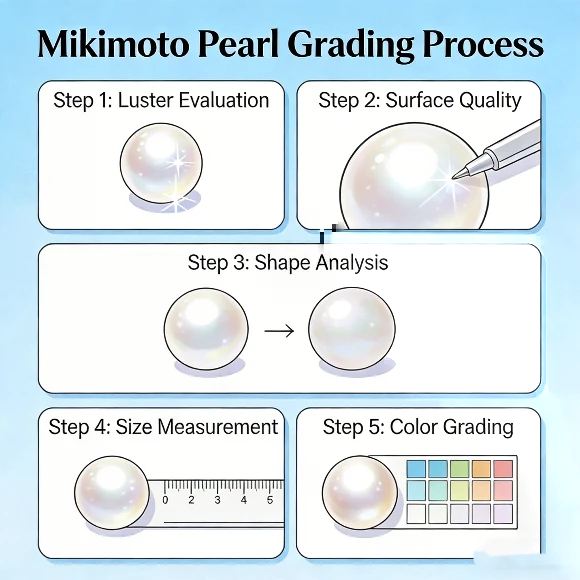
Mikimoto has its own proprietary grading system, far more rigorous than industry standards, which is a key part of what is special about Mikimoto pearls. The brand grades pearls based on four critical factors: luster, shape, surface quality, and nacre thickness. Only pearls with mirror-like luster, near-perfect roundness, minimal blemishes, and thick, luminous nacre (at least 0.8mm for Akoya pearls) make the cut.
Mikimoto’s Hanadama Akoya pearls—the highest grade—are even more exclusive, with less than 0.1% of harvested Akoya pearls qualifying. These pearls have a radiant, iridescent luster that seems to glow from within, a quality that no other brand can consistently replicate. This strict grading is what makes Mikimoto pearls instantly recognizable and highly coveted, and it’s a key part of answering what is special about Mikimoto pearls. To learn more about Mikimoto’s luxury status, which is tied to this quality, check the Mikimoto luxury brand guide.
1.2. Premium Sourcing & Cultivation
Another aspect of what is special about Mikimoto pearls is their careful sourcing and cultivation. Mikimoto owns and operates private pearl farms in Japan (for Akoya pearls), French Polynesia (for Tahitian pearls), and Australia (for South Sea pearls)—locations chosen for their ideal water conditions, which produce the finest pearls.
Each oyster is nurtured by hand for 2-4 years, twice as long as commercial pearl farms, to ensure thick, healthy nacre. The brand uses only sustainable, eco-friendly cultivation methods, avoiding harmful chemicals and ensuring the long-term health of marine ecosystems. This attention to sourcing and sustainability adds another layer of specialness to Mikimoto pearls, making them not just beautiful, but ethically made. For a look at affordable alternatives to the solid gold settings often paired with Mikimoto pearls, check the gold filled jewelry guide. What is special about Mikimoto pearls is that even their cultivation process reflects a commitment to excellence.
2. What is special about Mikimoto pearls? Craftsmanship Beyond Compare
While quality pearls are the foundation, it’s the handcrafted artistry that truly makes Mikimoto pearls special. Every step of the process—from selecting pearls to setting them into jewelry—is done by master jewelers with decades of experience, ensuring that each piece is a work of art.
2.1. Hand-Selected & Hand-Matched Pearls
Unlike mass-produced pearl jewelry, Mikimoto pearls are hand-selected and hand-matched by skilled jewelers. For a strand of pearls, jewelers spend hours (sometimes days) matching pearls for size, luster, shape, and color to create a cohesive, uniform look. This level of precision is rare in the industry and is a key part of what is special about Mikimoto pearls.
A single strand of Mikimoto Akoya pearls may require sorting through hundreds of pearls to find the perfect match, ensuring that every pearl complements the next. This attention to detail is why Mikimoto strands look so flawless—each pearl is chosen with intention, and no two strands are exactly alike. To compare the value of Mikimoto pearls across regions, read the Mikimoto Japan prices guide. What is special about Mikimoto pearls is that this level of care goes into every piece, no matter how small.
2.2. Artisanal Setting & Finishing
Mikimoto’s craftsmanship extends beyond pearl selection to the setting and finishing of each piece. The brand uses only 18k gold, platinum, and conflict-free diamonds in its settings, and each setting is handcrafted to complement the pearls, not overshadow them.
Master jewelers use delicate techniques to set each pearl securely, ensuring that it moves naturally and catches the light. The finishing touches—polishing the metal, refining the settings—are done by hand, resulting in a smooth, luxurious feel that is instantly recognizable. This artisanal approach is what makes Mikimoto jewelry feel special, even beyond the pearls themselves. To compare with another luxury brand’s material quality, check the Mejuri real gold guide. What is special about Mikimoto pearls is that their craftsmanship elevates the pearls, creating pieces that are both beautiful and timeless.
3. Legacy & Innovation: What Makes Mikimoto Pearls Timeless
Mikimoto’s specialness isn’t just about quality and craftsmanship—it’s also about its century-old legacy of innovation and dedication to pearls. The brand’s history is intertwined with the history of cultured pearls, and its commitment to innovation has kept it at the forefront of the luxury pearl industry for over 130 years.
3.1. Kokichi Mikimoto’s Revolutionary Innovation
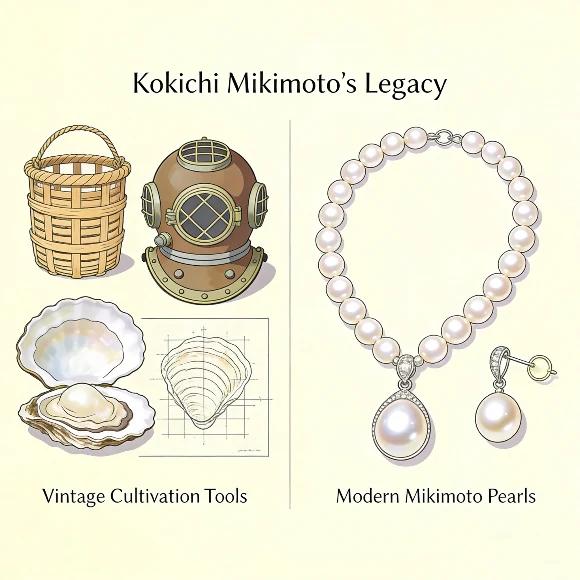
What is special about Mikimoto pearls begins with its founder, Kokichi Mikimoto, who in 1893 became the first person to successfully cultivate spherical pearls. Before Mikimoto, pearls were rare and expensive, found only in the wild. His innovation made high-quality pearls accessible to more people while maintaining their luxury status.
Kokichi’s vision—“to adorn the necks of all women with pearls”—drove the brand’s mission, and today, Mikimoto remains true to that vision, combining tradition with modern techniques. This revolutionary legacy is what makes Mikimoto pearls more than just jewelry; they are a piece of history, a symbol of innovation and perseverance. What is special about Mikimoto pearls is that their story is as extraordinary as the pearls themselves.
3.2. Century-Old Commitment to Excellence
For over 130 years, Mikimoto has maintained the same strict quality standards and commitment to craftsmanship that Kokichi established. The brand is still family-owned, and each generation of the Mikimoto family has upheld the founder’s vision of excellence.
This consistency is rare in the luxury industry, where many brands compromise on quality to cut costs. Mikimoto’s unwavering commitment to its legacy is what makes its pearls special—they are not just a trend, but a timeless investment that can be passed down through generations. What is special about Mikimoto pearls is that this commitment to excellence has never wavered, even after more than a century.
4. Exclusivity & Rarity: The Final Touch of Specialness
The final factor that makes Mikimoto pearls special is their exclusivity and rarity. Unlike mass-market pearl brands, Mikimoto maintains strict control over production, ensuring that its pearls remain rare and coveted—adding to their specialness and value.
4.1. Limited Production & Exclusivity
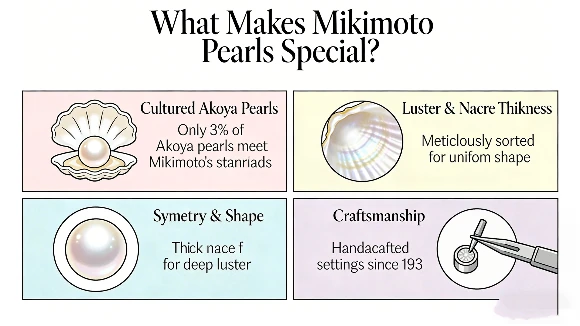
Mikimoto’s strict quality standards mean that production is limited. Less than 5% of harvested pearls meet the brand’s criteria, and many of its high-end pieces (like Hanadama Akoya strands or South Sea pearl jewelry) are produced in small quantities. This limited production ensures that Mikimoto pearls remain exclusive, making them a status symbol for luxury shoppers.
Additionally, Mikimoto does not mass-produce its jewelry, and many designs are released as limited editions or made to order. This exclusivity means that owning a Mikimoto pearl piece is a unique experience, further enhancing what is special about Mikimoto pearls.
4.2. Global Recognition & Covetability
Mikimoto pearls are recognized worldwide as the gold standard of luxury pearls, worn by royalty, celebrities, and discerning collectors. From the Japanese Imperial Family to modern-day icons like Beyoncé and Meghan Markle, Mikimoto pearls are a symbol of elegance and sophistication.
This global recognition, combined with their rarity and quality, makes Mikimoto pearls highly covetable. They are not just pearls—they are a statement of taste, a piece of luxury that stands the test of time. This covetability is the final touch that makes Mikimoto pearls truly special, and it’s a key part of answering what is special about Mikimoto pearls.
Conclusion
After exploring quality, craftsmanship, legacy, and exclusivity, it’s clear what is special about Mikimoto pearls: they are the perfect combination of uncompromising quality, handcrafted artistry, century-old innovation, and exclusive rarity. No other pearl brand can match Mikimoto’s strict standards, attention to detail, or rich legacy. What is special about Mikimoto pearls is that they embody excellence in every way, from cultivation to finishing.
Mikimoto pearls are more than just jewelry—they are works of art, pieces of history, and timeless investments. Their mirror-like luster, uniform shape, and luxurious feel set them apart, while their sustainable cultivation and ethical practices add depth to their specialness. Whether you own a small pair of Akoya studs or a rare Hanadama strand, Mikimoto pearls are a testament to excellence.
What is special about Mikimoto pearls? They are the gold standard of luxury pearls, crafted with passion, precision, and a legacy that spans over a century. They are not just beautiful—they are extraordinary, and that is what makes them unforgettable.
Related Reading
For more insights into Mikimoto’s luxury status, check the Mikimoto luxury brand guide. For tips on finding the best value when purchasing Mikimoto pearls, revisit the Mikimoto Japan prices guide.
- Where can I sell my Mikimoto pearls? Proven Top 4 Trusted Resale Options - Post Date: 2026-04-03
- What is the difference between Akoya and Mikimoto pearls? Clear Breakdown - Post Date: 2026-04-03
- Is Mikimoto a luxury brand? The Definitive Luxury Jewelry Guide - Post Date: 2026-04-02
- Is it cheaper to buy Mikimoto pearls in Japan? A Complete Price Guide - Post Date: 2026-04-02
- How to clean Mikimoto pearls? The Safe Luxury Pearl Care Guide - Post Date: 2026-04-02
- How much is the Mikimoto crown? The Ultimate Luxury Crown Price Guide - Post Date: 2026-04-02
- Does Mikimoto ever go on sale? The Truth About Luxury Pearl Discounts - Post Date: 2026-04-02
- Is Mikimoto cheaper in Japan? A Complete Price Comparison Guide - Post Date: 2026-04-02
- Why are Mikimoto pearls so expensive? The Luxury Pearl Price Breakdown - Post Date: 2026-04-02
- How much are Mikimoto pearls worth? A Complete Value Breakdown - Post Date: 2026-04-02
- Why is Cartier so expensive?What is special about Cartier? - Post Date: 2026-03-15
- skyworth tv is what brand?skyworth tv is it easy to use for? - Post Date: 2026-03-11
- Why is Van Cleef so expensive?Is Cartier or Van Cleef cheaper? - Post Date: 2026-03-17
- Why is Graff so expensive?Is Graff a high-end jewelry brand? - Post Date: 2026-03-18
- Is Cartier worth the money?Which is more expensive cartier or bvlgari jewelry? - Post Date: 2026-03-17
- 925 Silver vs Stainless Steel Jewelry - Post Date: 2026-03-20
- Is Bulgari a Luxury Brand?Is Bulgari higher than Cartier? - Post Date: 2026-03-18
- Why is Tiffany so expensive now?Is Tiffany considered a luxury brand? - Post Date: 2026-03-17
- Dreame brand is from which country?Is Dreame owned by Xiaomi? - Post Date: 2026-03-15
- How does the Pigeon brand ensure product safety - Post Date: 2026-03-17
- Fred Force 10 Bracelet Guide: Sizing, Price & Vintage Options - Post Date: 2026-04-05
- Is David Morris a luxury brand? Timeless Craftsmanship That Defines Elite Luxury - Post Date: 2026-04-04
- Who is the designer of Belperron jewelry? The Visionary Who Redefined Luxury - Post Date: 2026-04-04
- What makes Belperron jewelry unique? Fascinating Design Secrets Collectors Adore - Post Date: 2026-04-04
- Is Fred Jewelry under LVMH? Clear Ownership & Brand History Guide - Post Date: 2026-04-04
- Why is Boucheron so Expensive? Craftsmanship & Series That Justify the Price - Post Date: 2026-04-04
- Is Boucheron or Mellerio Older? Fascinating Age Comparison of Iconic Brands - Post Date: 2026-04-04
- When was Boucheron Founded? Fascinating Historical Origins Revealed - Post Date: 2026-04-04
- Is Boucheron a Luxury Brand? Expert Verdict & Analysis - Post Date: 2026-04-04
- Is Damiani a Luxury Brand? A Complete Expert Analysis - Post Date: 2026-04-04