
How To Clean Tarnished 925 Silver At Home
Learn How To Clean Tarnished 925 Silver At Home with safe, easy household methods. Remove tarnish quickly and keep your sterling silver jewelry shiny and new.
How To Clean Tarnished 925 Silver At Home is one of the most common questions for anyone who owns sterling silver jewelry. Tarnish is natural and unavoidable, but you can easily restore your jewelry’s shine with simple, safe household items. This guide will show you the gentlest and most effective ways to clean tarnished 925 silver without causing damage. Many people do not realize that water exposure speeds up silver tarnish.
Learning How To Clean Tarnished 925 Silver At Home saves you money on professional cleaning and keeps your jewelry looking new all year long. With basic products you already own, you can remove discoloration and bring back the bright luster of your silver pieces.
Why Does 925 Silver Get Tarnished
925 silver tarnishes when it reacts with moisture, oxygen, sweat, perfume, lotion, and humidity. These elements create a thin layer of discoloration that makes silver look dark, dull, or black.
The more your jewelry is exposed to water and chemicals, the faster it tarnishes. Showering with silver jewelry is one of the main causes of early tarnish.
Gentle Ways To Clean Tarnished 925 Silver At Home
You only need mild household items to clean tarnished 925 silver at home, such as warm water, mild dish soap, microfiber cloths, and baking soda. Harsh chemicals, brushes, and abrasives can scratch or weaken your jewelry.
All methods in this guide are safe for rings, necklaces, bracelets, earrings, and all types of 925 sterling silver accessories.
Simple Step-by-Step Cleaning Process
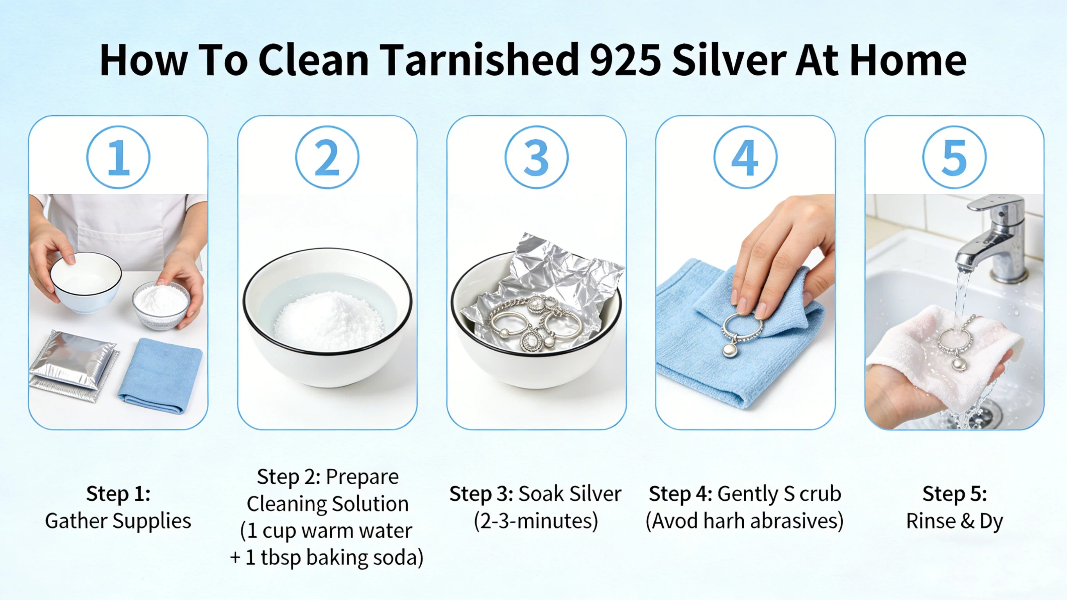
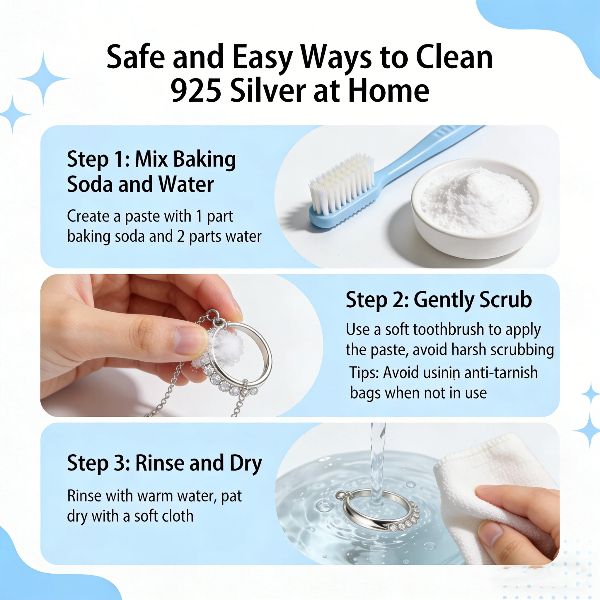
Start by wiping your jewelry with a soft, dry cloth to remove surface dirt. Then soak it in warm, soapy water for 3 to 5 minutes. Gently wipe the tarnish away, rinse with clean water, and dry immediately.
For heavier tarnish, use a mild baking soda paste and gently rub the surface with a soft cloth. Always avoid scrubbing hard to protect your silver.
How To Prevent Tarnish After Cleaning
Once you learn How To Clean Tarnished 925 Silver At Home, you should also take steps to keep it from tarnishing quickly. Store your jewelry in a dry, airtight container and keep it away from moisture and humidity.
Avoid wearing your 925 silver in the shower, hot tub, or pool. Swimming with silver jewelry can cause severe and permanent tarnish.
Final Thoughts on How To Clean Tarnished 925 Silver At Home
How To Clean Tarnished 925 Silver At Home is easy, affordable, and safe when you use gentle methods. Regular, light cleaning is far better than occasional deep scrubbing.
With simple daily habits and quick at-home cleaning, your 925 sterling silver jewelry will stay shiny, beautiful, and in great condition for many years.
- Can Salt Water Ruin 925 Silver Jewelry - Post Date: 2026-03-22
- Is 925 Silver A Precious Metal - Post Date: 2026-03-22
- Fake Silver vs Real 925 Silver - Post Date: 2026-03-21
- Can You Fix Blackened 925 Silver Jewelry - Post Date: 2026-03-21
- Can I Clean My 925 Silver While Showering - Post Date: 2026-03-21
- 925 Silver vs Gold Plated Jewelry: Which Is Better For You - Post Date: 2026-03-21
- How To Prevent 925 Silver From Tarnishing - Post Date: 2026-03-21
- Can I Wear 925 Silver In The Hot Tub - Post Date: 2026-03-21
- Can You Swim With 925 Silver Jewelry - Post Date: 2026-03-20
- Why Is 925 Silver So Popular In Jewelry - Post Date: 2026-03-20
- Why is Cartier so expensive?What is special about Cartier? - Post Date: 2026-03-15
- skyworth tv is what brand?skyworth tv is it easy to use for? - Post Date: 2026-03-11
- Why is Van Cleef so expensive?Is Cartier or Van Cleef cheaper? - Post Date: 2026-03-17
- Why is Graff so expensive?Is Graff a high-end jewelry brand? - Post Date: 2026-03-18
- Is Cartier worth the money?Which is more expensive cartier or bvlgari jewelry? - Post Date: 2026-03-17
- 925 Silver vs Stainless Steel Jewelry - Post Date: 2026-03-20
- Is Bulgari a Luxury Brand?Is Bulgari higher than Cartier? - Post Date: 2026-03-18
- Why is Tiffany so expensive now?Is Tiffany considered a luxury brand? - Post Date: 2026-03-17
- Dreame brand is from which country?Is Dreame owned by Xiaomi? - Post Date: 2026-03-15
- How does the Pigeon brand ensure product safety - Post Date: 2026-03-17
- Fred Force 10 Bracelet Guide: Sizing, Price & Vintage Options - Post Date: 2026-04-05
- Is David Morris a luxury brand? Timeless Craftsmanship That Defines Elite Luxury - Post Date: 2026-04-04
- Who is the designer of Belperron jewelry? The Visionary Who Redefined Luxury - Post Date: 2026-04-04
- What makes Belperron jewelry unique? Fascinating Design Secrets Collectors Adore - Post Date: 2026-04-04
- Is Fred Jewelry under LVMH? Clear Ownership & Brand History Guide - Post Date: 2026-04-04
- Why is Boucheron so Expensive? Craftsmanship & Series That Justify the Price - Post Date: 2026-04-04
- Is Boucheron or Mellerio Older? Fascinating Age Comparison of Iconic Brands - Post Date: 2026-04-04
- When was Boucheron Founded? Fascinating Historical Origins Revealed - Post Date: 2026-04-04
- Is Boucheron a Luxury Brand? Expert Verdict & Analysis - Post Date: 2026-04-04
- Is Damiani a Luxury Brand? A Complete Expert Analysis - Post Date: 2026-04-04