How to Choose Jewelry for a First Date: Perfect Stylish Tips
Learn how to choose jewelry for a first date, pick subtle, charming pieces that complement your outfit, show your personality, and make a great first impression.
How to choose jewelry for a first date? The key is to keep it subtle, charming, and true to your style—jewelry that enhances your outfit without stealing the spotlight. A first date is all about making a genuine connection, so your jewelry should complement your personality, not overshadow it. Whether your date is casual (coffee or a walk) or semi-formal (dinner or a show), the right jewelry will add a touch of polish, boost your confidence, and leave a memorable, approachable impression.
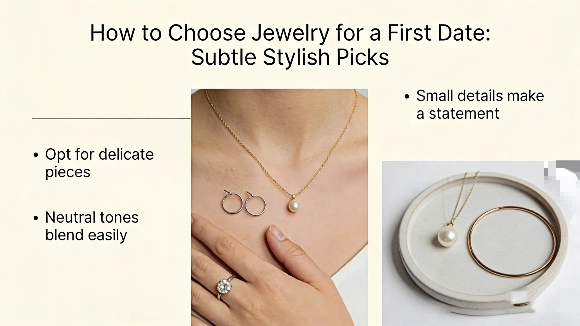
When figuring out how to choose jewelry for a first date, remember: less is almost always more. Bold, oversized statement pieces can feel overwhelming, while delicate, thoughtful pieces show you put effort into your look without trying too hard. Your jewelry should align with the date’s vibe, your outfit, and your personal style—no need to wear something that feels “too much” or out of character.
The goal is to choose pieces that feel effortless and intentional. A small pendant necklace, simple earrings, or a thin bracelet can add just enough sparkle to make you feel put-together, while keeping the focus on your conversation and connection. Avoid loud, clunky pieces that might distract or feel uncomfortable during a first date.
Match Jewelry to the First Date Vibe
One of the most important steps in how to choose jewelry for a first date is matching it to the occasion. For a casual date (coffee, brunch, or a walk in the park), opt for minimal, laid-back pieces. Think thin silver or gold chains, small stud earrings, or a simple beaded bracelet—pieces that feel relaxed and comfortable.
For a semi-formal date (dinner at a nice restaurant, a concert, or a theater show), you can elevate your jewelry slightly. A delicate layered necklace, small hoop earrings, or a thin stack of rings works well—still subtle, but with a touch of elegance. Avoid anything too formal (like a diamond statement necklace) unless the date is black-tie (rare for a first date!).
Always consider the setting: a beach date calls for waterproof, simple jewelry, while a cozy dinner allows for a bit more sparkle. Matching your jewelry to the vibe shows you’re thoughtful and detail-oriented.
Choosing occasion-appropriate jewelry aligns with the attention to detail in luxury pieces, as explained in is Georg Jensen a luxury brand, where design fits the moment perfectly.
Keep Jewelry True to Your Personality
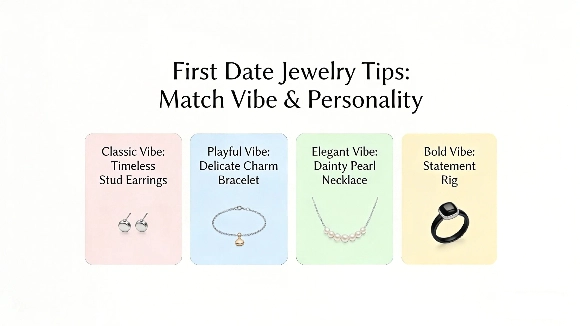
When learning how to choose jewelry for a first date, never sacrifice your style for what you think “should” work. If you love minimal jewelry, stick to delicate pieces—don’t force a bold necklace if it feels inauthentic. If you prefer a bit of sparkle, opt for small, dainty pieces with tiny gemstones or crystals that reflect your taste without being over-the-top.
For example, if you’re a laid-back person, a simple leather bracelet or small silver studs are perfect. If you’re more feminine, a delicate pearl pendant or small rose gold hoop earrings will feel natural. Your jewelry should be an extension of you, helping you feel confident and comfortable—confidence is the best accessory for a first date!
Authenticity in style is just as important as in luxury jewelry, similar to the guidance in how to tell real vs fake 925 silver, where genuine pieces feel more intentional.
Avoid Common First Date Jewelry Mistakes
To master how to choose jewelry for a first date, steer clear of a few common mistakes. First, avoid overly expensive or flashy pieces—they can come across as trying too hard or intimidating. Second, skip noisy jewelry (like jangly bangles) that might distract during conversation. Third, don’t wear too many pieces at once—stick to 1-2 focal pieces (e.g., a necklace + earrings, or a bracelet + ring) to keep your look clean.
Also, make sure your jewelry is clean and in good condition. Tarnished silver or scratched rings can look unkempt, so take a minute to polish your pieces before the date. Simple care goes a long way in making a polished impression.
Caring for your jewelry shows attention to detail, much like the principles in how to clean diamond jewelry, where small efforts enhance overall appeal.
Conclusion
So, how to choose jewelry for a first date? It’s simple: keep it subtle, match the occasion, stay true to your style, and avoid overdoing it. The best first date jewelry is delicate, intentional, and comfortable—pieces that make you feel confident and allow your personality to shine.
Whether you opt for a tiny pendant, simple studs, or a thin bracelet, the right jewelry will add a touch of polish without stealing the spotlight. Remember, the goal of a first date is to connect, and your jewelry should support that—not distract from it.
For more jewelry styling tips for special occasions, visit American Gem Society and National Jeweler.
- How to Get Jewelry Appraised Simple Reliable Guide - Post Date: 2026-03-28
- What Color Jewelry Should I Wear: Easy & Flattering Complete Guide - Post Date: 2026-03-28
- How to Pick Minimalist Jewelry: Simple Elegant Choices - Post Date: 2026-03-28
- How to Wear Jewelry: Simple Pro Tips for Perfect Style - Post Date: 2026-03-28
- What are the top 10 clothing brands for ladies?What is Gen Z wearing right now? - Post Date: 2026-03-17
- What baby clothing brand is most popular?What brands do kids wear these days? - Post Date: 2026-03-15
- Why is Cartier so expensive?What is special about Cartier? - Post Date: 2026-03-15
- skyworth tv is what brand?skyworth tv is it easy to use for? - Post Date: 2026-03-11
- Why is Van Cleef so expensive?Is Cartier or Van Cleef cheaper? - Post Date: 2026-03-17
- Why is Graff so expensive?Is Graff a high-end jewelry brand? - Post Date: 2026-03-18
- Is Cartier worth the money?Which is more expensive cartier or bvlgari jewelry? - Post Date: 2026-03-17
- 925 Silver vs Stainless Steel Jewelry - Post Date: 2026-03-20
- Is Bulgari a Luxury Brand?Is Bulgari higher than Cartier? - Post Date: 2026-03-18
- Why is Tiffany so expensive now?Is Tiffany considered a luxury brand? - Post Date: 2026-03-17
- Dreame brand is from which country?Is Dreame owned by Xiaomi? - Post Date: 2026-03-15
- How does the Pigeon brand ensure product safety - Post Date: 2026-03-17
- Is Graff Jewelry Worth It? Honest Luxury Value Review - Post Date: 2026-04-03
- Is Graff jewelry a good brand? Expert Luxury Brand Review - Post Date: 2026-04-03
- How Much Is Graff Jewelry? Honest Luxury Price Guide - Post Date: 2026-04-03
- Where to Buy Chopard Jewelry? Trusted & Authentic Channels - Post Date: 2026-04-03
- Is Chopard Jewellery Worth It? Honest Luxury Review - Post Date: 2026-04-03
- Does Chopard jewelry hold value? A Complete Honest Answer - Post Date: 2026-04-03
- Is Chopard a Swiss Brand? Yes, It’s a Genuine Swiss Luxury Icon - Post Date: 2026-04-03
- Where can I sell my Mikimoto pearls? Proven Top 4 Trusted Resale Options - Post Date: 2026-04-03
- What is the difference between Akoya and Mikimoto pearls? Clear Breakdown - Post Date: 2026-04-03
- What is special about Mikimoto pearls? Their Unmatched Excellence - Post Date: 2026-04-03