
Why are Mikimoto so expensive? The Iconic Luxury Pearl Legacy
For luxury pearl shoppers, Why are Mikimoto so expensive? This guide breaks down Akoya pearl craftsmanship, brand legacy, and strict grading standards to help you understand its luxury value today.
For fine jewelry lovers, Why are Mikimoto so expensive is a critical question before investing.
Many shoppers recognize Mikimoto as the world’s most famous pearl brand, but few understand why its pieces command such premium prices compared to other luxury pearl jewelers. This gap in knowledge leaves buyers uncertain if the high cost is justified by genuine quality, or if it is simply brand markup. Many also struggle to distinguish what sets Mikimoto apart from other pearl brands, especially when new to fine pearl jewelry. Check the Pandora jewelry real guide to learn how top jewelry brands build their legacies through verified quality.
I promise to deliver a full, unbiased answer to Why are Mikimoto so expensive, free from marketing hype and filled with fact-based details about the brand’s history, standards, and craftsmanship. We’ll break down every core factor that drives the brand’s premium pricing, with insights from industry standards and the brand’s 130+ year legacy.
By the end of this guide, you’ll learn about Mikimoto’s pioneering role in inventing cultured pearls, its unmatched pearl selection and grading standards, its world-class artisanal craftsmanship, and its unrivaled brand prestige in the luxury jewelry space. You’ll walk away with a clear understanding of exactly Why are Mikimoto so expensive, and whether the brand’s pieces are worth the investment. For official pearl grading and jewelry quality standards, visit the Gemological Institute of America, and for U.S. luxury jewelry marketing regulations, explore the U.S. Federal Trade Commission.
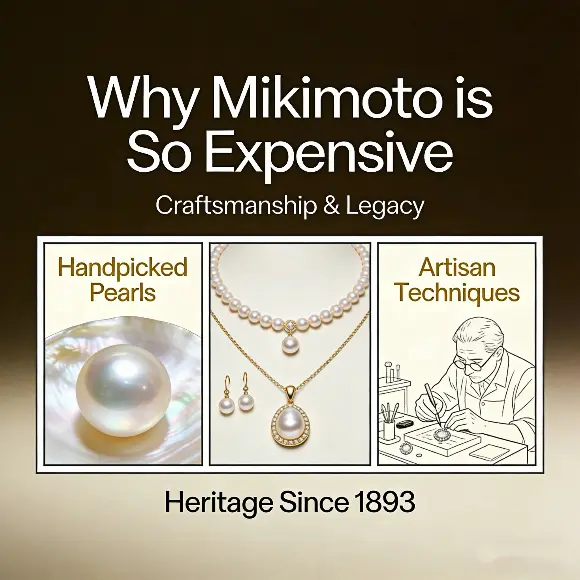
1. Mikimoto’s Pioneering Legacy & The Birth of Cultured Pearls
The first chapter in answering Why are Mikimoto so expensive starts with the brand’s revolutionary founding story, which forever changed the global pearl industry. Unlike other luxury jewelers that entered the pearl trade after it was established, Mikimoto invented the modern cultured pearl industry itself, a legacy that underpins every piece the brand creates.
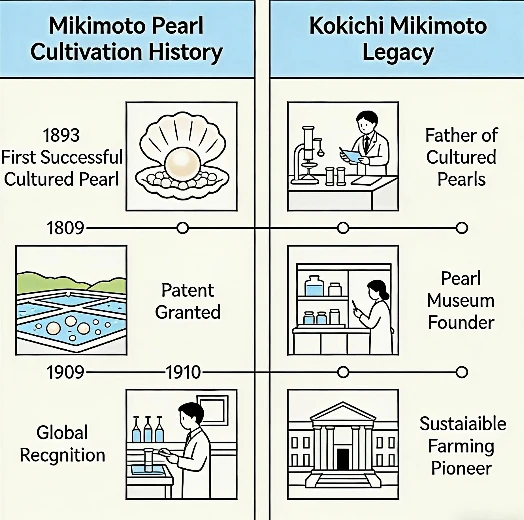
1.1. Kokichi Mikimoto & The Cultured Pearl Revolution (1893)
Mikimoto’s story begins with Kokichi Mikimoto, the Japanese innovator known today as the “King of Pearls”. In the late 1800s, natural pearls were extremely rare and expensive, with only 1 in 1000 oysters producing a gem-quality natural pearl. Overfishing had pushed Akoya pearl oysters to the brink of extinction, and Mikimoto set out to solve this crisis by cultivating pearls artificially.
After 12 years of relentless experimentation, multiple failures, and near bankruptcy from natural disasters like red tide algal blooms, Mikimoto succeeded in creating the world’s first cultured hemispherical pearls in 1893. By 1905, he perfected the technique to grow perfectly round cultured pearls, indistinguishable from the finest natural pearls. This invention revolutionized the pearl industry, making fine pearls accessible to the world for the first time—and this pioneering legacy is a core part of Why are Mikimoto so expensive.
1.2. Global Rise as the “King of Pearls”
In 1899, Mikimoto opened his first boutique in Tokyo’s Ginza district, laying the foundation for Japan’s modern jewelry industry. By the 1920s, the brand had expanded globally, opening boutiques in London, Paris, and New York, and became the official jeweler to royal families and celebrities worldwide.
Mikimoto’s mission—“to adorn all women of the world with pearls”—guided the brand’s growth for over a century. Unlike other jewelers that source pearls from third-party farms, Mikimoto has owned and operated its own pearl farms since its founding, giving it end-to-end control over the entire pearl production process. This level of vertical integration is almost unheard of in the luxury jewelry industry, and it is a key piece of the puzzle when answering Why are Mikimoto so expensive.
2. Unmatched Pearl Selection & Grading: Why are Mikimoto so expensive?
The most significant factor in answering Why are Mikimoto so expensive is the brand’s unrivaled standards for pearl quality and selection. Mikimoto’s grading criteria are among the strictest in the world, with only a tiny fraction of harvested pearls meeting the brand’s standards for use in its jewelry.
2.1. Industry-Leading Pearl Cultivation Standards
Mikimoto’s pearl farms are located in pristine, protected waters across Japan, Australia, and French Polynesia, with ideal conditions for growing high-quality pearls. Each Akoya pearl oyster is cared for by expert farmers for 2 to 4 years before harvesting, with constant monitoring to protect the oysters from pollution, disease, and natural disasters.
Unlike mass-market pearl farms that harvest pearls after just 12 to 18 months, Mikimoto allows its pearls to develop thicker nacre layers—the organic coating that gives pearls their luster and durability. The brand’s minimum nacre thickness standards far exceed industry norms, resulting in pearls with a deep, mirror-like glow that lesser pearls cannot match. This commitment to slow, sustainable cultivation is a major reason Why are Mikimoto so expensive.
2.2. Mikimoto’s Proprietary Grading System & Ultra-Selective Sourcing
After harvesting, every single Mikimoto pearl is hand-inspected by expert gemologists using the brand’s proprietary grading system, which evaluates pearls on five core criteria: luster, nacre thickness, shape, surface quality, and color. The brand’s standards are so strict that less than 5% of harvested pearls qualify for use in Mikimoto jewelry.
Even the brand’s lowest accepted grade of pearls would be considered high-quality by most other jewelers’ standards. Its top AAA grade pearls represent less than 1% of the total harvest, with virtually no surface blemishes, perfect roundness, and exceptional luster. For its iconic Hanadama pearls—the highest grade of Akoya pearls, a term created by Mikimoto himself—less than 0.1% of harvested pearls make the cut. This extreme level of selectivity means every Mikimoto pearl is exceptionally rare, and this rarity is a core driver of the brand’s premium pricing. To understand the difference between Mikimoto’s fine jewelry and mass-market fashion pieces, read the costume jewelry truth guide.
3. Handcrafted Excellence & Iconic Design Heritage
Beyond the pearls themselves, another key part of answering Why are Mikimoto so expensive is the brand’s uncompromising commitment to artisanal craftsmanship and timeless design. Every Mikimoto piece is handcrafted by master jewelers, with a level of attention to detail that matches the world’s top luxury jewelry houses.
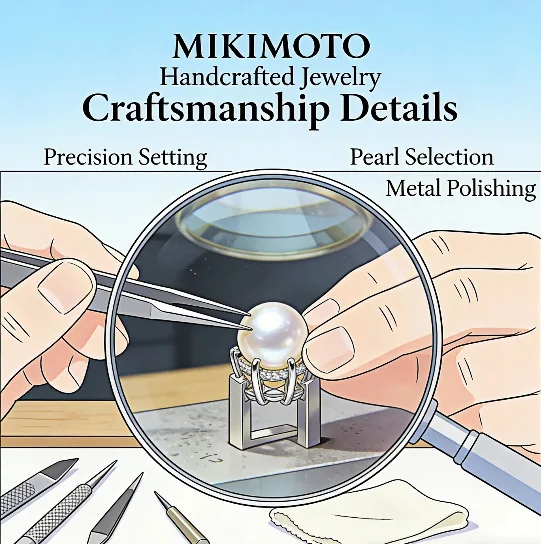
3.1. Artisanal Metalwork & Jewelry Craftsmanship
Every Mikimoto piece is assembled by hand in the brand’s Tokyo workshops by skilled artisans, many of whom have decades of experience. Even the simplest pair of stud earrings undergoes multiple rounds of quality inspection, with every detail perfected to match the brand’s standards.
The brand exclusively uses 18k solid gold and platinum for its settings, with no low-quality plated metals that fade or wear over time. The pearls in every Mikimoto strand are perfectly matched in size, color, luster, and shape—a painstaking process that can take weeks for a single necklace. The brand’s clasps are often set with small diamonds, with smooth, seamless construction that ensures comfort and durability. To understand the gold purity markings used in Mikimoto’s pieces, check the 585 jewelry meaning guide. For simple methods to verify the solid gold used in fine jewelry, use the real gold test guide.
3.2. Timeless Iconic Collections That Define Luxury Pearls
Mikimoto’s design philosophy balances timeless elegance with modern innovation, creating pieces that remain relevant for generations. The brand’s iconic collections, from its classic pearl strands to its high jewelry couture pieces, have redefined how the world sees pearl jewelry.
For decades, Mikimoto has collaborated with top designers to create collections that break the stereotype of pearls as only for formal, traditional wear. Its pieces have been worn by royalty, Hollywood stars, and first ladies, from Grace Kelly to Michelle Obama, cementing the brand’s status as a symbol of timeless luxury. This design legacy and cultural relevance add significant value to every Mikimoto piece, and it is another key reason Why are Mikimoto so expensive.
4. Brand Prestige, Cultural Status & Long-Term Investment Value
The final piece of answering Why are Mikimoto so expensive is the brand’s unrivaled prestige and long-term value in the luxury market. For over 130 years, Mikimoto has been synonymous with the highest quality pearls, and the brand name carries a level of recognition and respect that no other pearl jeweler can match.
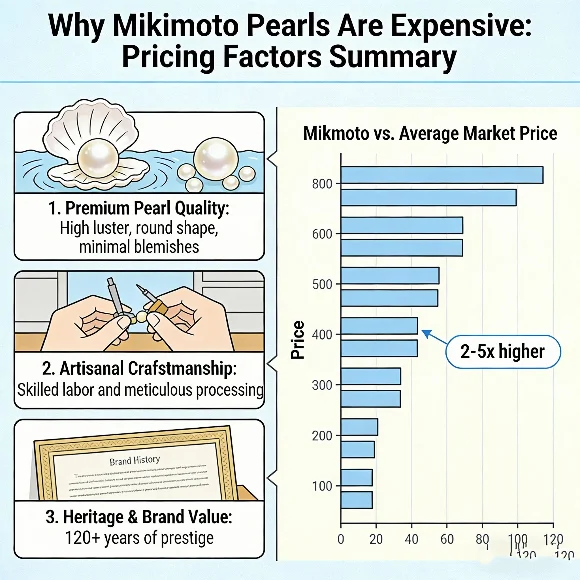
Mikimoto is to pearls what Rolex is to watches or Cartier is to fine jewelry—a globally recognized symbol of luxury, quality, and heritage. Owning a Mikimoto piece is not just about owning a beautiful piece of jewelry; it is about owning a piece of pearl history. This brand prestige drives strong global demand for Mikimoto pieces, with collectors and jewelry lovers seeking out the brand specifically for its unrivaled reputation.
Unlike many fashion jewelry brands that lose value over time, Mikimoto pieces hold their value exceptionally well on the secondary market. Vintage Mikimoto pieces from the early 20th century regularly sell for well above their original retail price at auction, with rare high jewelry pieces commanding six-figure sums. This long-term investment value is a major factor for many buyers, and it is a core part of Why are Mikimoto so expensive.
The brand’s global retail network, with luxury boutiques in the world’s most prestigious shopping districts, also adds to its premium positioning. Every Mikimoto boutique offers a personalized luxury shopping experience, with expert staff who educate buyers on pearl quality and care. This level of service and brand experience is factored into the price of every piece, just like with other top luxury brands.
Conclusion
After breaking down every core factor, the answer to Why are Mikimoto so expensive is clear: the brand’s premium pricing is fully justified by its pioneering legacy, unmatched pearl quality standards, world-class artisanal craftsmanship, and unrivaled brand prestige in the luxury jewelry space.
When you buy a Mikimoto piece, you are not just buying a pearl necklace or a pair of earrings. You are buying over 130 years of pearl expertise, a piece of jewelry made with pearls from the top 5% of the global harvest, handcrafted by master artisans, and backed by the name that invented the modern cultured pearl industry.
Whether you are a first-time pearl buyer or a seasoned collector, Mikimoto’s pieces offer a level of quality, heritage, and timeless elegance that no other pearl jeweler can match. While the price point is premium, the value, longevity, and legacy of a Mikimoto piece make it a worthwhile investment for anyone seeking the finest pearl jewelry in the world.
Related Reading
For affordable luxury jewelry alternatives that capture the elegance of fine pearls at a lower price point, check the gold filled jewelry guide. For more insights into how top jewelry brands build their legacies through verified quality, revisit the Pandora jewelry real guide.
- Are Mikimoto pearls valuable? A Complete Guide to Their Worth - Post Date: 2026-04-02
- Are Mikimoto pearls worth it? The Ultimate Luxury Pearl Investment Guide - Post Date: 2026-04-02
- How to spot fake mikimoto pearls - Post Date: 2026-03-24
- How much is mikimoto pearl necklace - Post Date: 2026-03-24
- Is TASAKI a Good Brand? 2026 Guide to Japanese Pearl Luxury - Post Date: 2026-04-01
- What makes Fred jewelry unique? 2026 French Luxury Brand Guide - Post Date: 2026-04-01
- Is Fred jewelry worth it? 2026 Luxury Value & French Craftsmanship Guide - Post Date: 2026-04-01
- Which country made Fred jewelry? The Complete French Luxury Story 2026 - Post Date: 2026-04-01
- How does Fred jewelry compare to Cartier? 2026 Luxury Jewelry Showdown - Post Date: 2026-04-01
- Where is Gorjana Jewelry Made? Full Manufacturing & Crafting Breakdown - Post Date: 2026-03-31
- Why is Cartier so expensive?What is special about Cartier? - Post Date: 2026-03-15
- skyworth tv is what brand?skyworth tv is it easy to use for? - Post Date: 2026-03-11
- Why is Van Cleef so expensive?Is Cartier or Van Cleef cheaper? - Post Date: 2026-03-17
- Why is Graff so expensive?Is Graff a high-end jewelry brand? - Post Date: 2026-03-18
- Is Cartier worth the money?Which is more expensive cartier or bvlgari jewelry? - Post Date: 2026-03-17
- 925 Silver vs Stainless Steel Jewelry - Post Date: 2026-03-20
- Is Bulgari a Luxury Brand?Is Bulgari higher than Cartier? - Post Date: 2026-03-18
- Why is Tiffany so expensive now?Is Tiffany considered a luxury brand? - Post Date: 2026-03-17
- Dreame brand is from which country?Is Dreame owned by Xiaomi? - Post Date: 2026-03-15
- How does the Pigeon brand ensure product safety - Post Date: 2026-03-17
- Are Mikimoto pearls valuable? A Complete Guide to Their Worth - Post Date: 2026-04-02
- Are Mikimoto pearls worth it? The Ultimate Luxury Pearl Investment Guide - Post Date: 2026-04-02
- What is the history of TASAKI? 2026 Complete Guide to the Japanese Pearl Brand - Post Date: 2026-04-01
- Is TASAKI a Good Brand? 2026 Guide to Japanese Pearl Luxury - Post Date: 2026-04-01
- What makes Fred jewelry unique? 2026 French Luxury Brand Guide - Post Date: 2026-04-01
- Is Fred jewelry worth it? 2026 Luxury Value & French Craftsmanship Guide - Post Date: 2026-04-01
- Which country made Fred jewelry? The Complete French Luxury Story 2026 - Post Date: 2026-04-01
- Why are diamonds so expensive De Beers? Honest 2026 Market Impact Guide - Post Date: 2026-04-01
- Does De Beers sell jewelry? Honest & Definitive 2026 Retail & Product Guide - Post Date: 2026-04-01
- Is De Beers a luxury brand? Ultimate Luxury Brand Analysis 2026 - Post Date: 2026-04-01