
What is the history of TASAKI? 2026 Complete Guide to the Japanese Pearl Brand
For luxury jewelry enthusiasts, What is the history of TASAKI? This guide covers its pearl farming roots, Mabe pearl innovation, brand transformation, and global expansion to help you explore its rich legacy today.
For jewelry history lovers, What is the history of TASAKI is a question that reveals a story of innovation and resilience.
Many people recognize TASAKI as a top Japanese luxury jewelry brand, known for its exquisite pearls and modern designs, but few know the full journey of how it evolved from a small pearl farm to a global luxury icon. This gap in knowledge leaves enthusiasts wanting to understand the brand’s origins, key milestones, and the forces that shaped its legacy, making What is the history of TASAKI a common search for those curious about Japanese fine jewelry heritage. Check the Pandora jewelry real guide to learn how other top jewelry brands build their own enduring legacies through authenticity.
I promise to deliver a comprehensive, fact-based answer to What is the history of TASAKI, free from marketing hype and filled with the key details that define its journey. We’ll trace the brand from its earliest days as a pearl farming family to its current status as a globally recognized luxury jewelry house, highlighting the pivotal moments and innovations that set it apart and answer What is the history of TASAKI in full detail.
By the end of this guide, you’ll learn about TASAKI’s humble beginnings in Japan’s pearl industry, its groundbreaking work in reviving Mabe pearls, its strategic brand transformation, and its expansion into global markets. You’ll walk away with a complete understanding of how TASAKI grew from a local pearl farm to a beloved luxury brand, and a clear grasp of What is the history of TASAKI and its lasting impact on fine jewelry. For official standards on pearl grading and jewelry craftsmanship, visit the Gemological Institute of America, and for regulations governing luxury jewelry marketing in the U.S., explore the U.S. Federal Trade Commission.
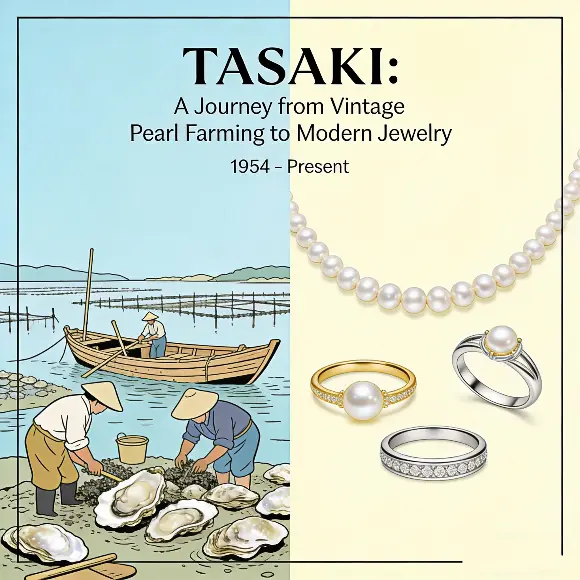
1. Founding & Early Beginnings: What is the history of TASAKI’s Pearl Farming Roots (1933-1970s)
The first chapter in answering What is the history of TASAKI starts with its humble origins in Japan’s pearl industry, long before the brand became a household name in luxury jewelry. TASAKI’s story begins with a family’s passion for pearl farming, a foundation that would shape its identity for decades to come and define the core of What is the history of TASAKI.
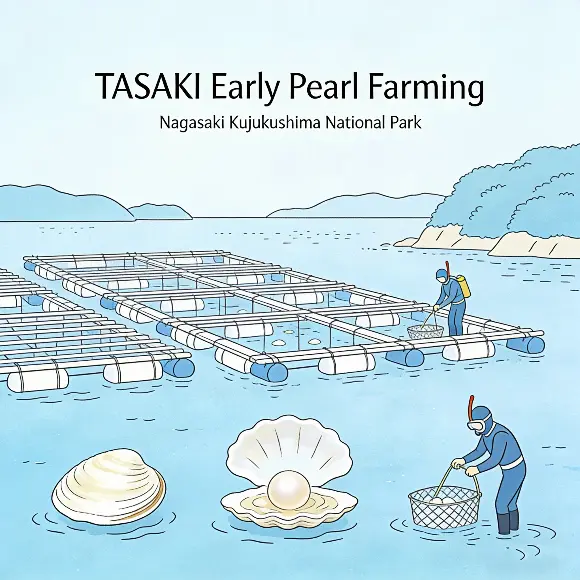
1.1. The Tasaki Family’s Pearl Farming Journey (1933-1954)
The Tasaki family’s involvement in pearl farming dates back to 1933, when they began operating their first pearl farm in Japan, long before the official launch of the TASAKI brand. At the time, Japan was a leader in global pearl cultivation, though the industry would later face challenges from pollution and overcultivation. The family focused on cultivating high-quality Akoya pearls, leveraging Japan’s pristine coastal waters to produce pearls with exceptional luster and quality.
This early experience in pearl farming gave the family a deep understanding of the entire pearl lifecycle, from nurturing oysters to harvesting and grading pearls. By the 1950s, the family had established a reputation for producing some of Japan’s finest pearls, laying the groundwork for the official launch of the TASAKI brand in 1954 by Shunsaku Tasaki in Kobe, Japan. This family-led start is a critical part of understanding What is the history of TASAKI.
1.2. Brand Inception & Mabe Pearl Innovation (1954-1970)
In 1954, Shunsaku Tasaki officially founded the TASAKI brand, with a mission to redefine pearl jewelry through quality and innovation. Just five years later, in 1959, the brand opened its own dedicated pearl farm base in Nagasaki Prefecture’s Kujukushima National Park, a protected area with ideal water conditions for pearl cultivation.
The brand’s first major milestone came in 1970, when TASAKI made history by successfully farming Mabe pearls through artificial seeding, reviving a nearly extinct pearl variety once on the brink of disappearance. This breakthrough not only solidified TASAKI’s reputation as a pioneer in pearl cultivation but also expanded the possibilities for pearl jewelry design, thanks to the Mabe pearl’s unique semi-circular shape and vibrant luster. This innovation remains a key part of What is the history of TASAKI, as it set the brand apart from other pearl jewelry houses.
2. Expansion & Industry Milestones (1980s-2008)
As TASAKI grew, it expanded beyond pearl farming to become a full-fledged luxury jewelry brand, achieving key milestones that cemented its position in the global industry. This era of growth was marked by strategic moves into new markets and a commitment to craftsmanship that matched the world’s top luxury houses, adding important chapters to What is the history of TASAKI.
2.1. Diamond Sector Breakthrough (1994)
In 1994, TASAKI made a bold move to diversify beyond pearls, becoming the only Japanese jeweler to earn a Sightholder license from the De Beers Group. This prestigious accreditation granted TASAKI direct access to the world’s highest-quality rough diamonds, a rare privilege that few jewelers globally could claim.
This expansion into diamonds allowed TASAKI to create more diverse jewelry collections, blending pearls with diamonds and colored gemstones to appeal to a broader luxury audience. The brand’s diamond craftsmanship quickly matched its pearl expertise, with in-house master cutters ensuring each diamond met the highest standards of cut, symmetry, and polish. To understand the gold purity markings used in TASAKI’s diamond and pearl pieces, check the 585 jewelry meaning guide.
2.2. Public Listing & Market Growth (1993-2008)
TASAKI’s growth continued in 1993, when the brand was listed on the Tokyo Stock Exchange, a significant milestone that reflected its rising prominence in the Japanese and global luxury markets. Over the next decade, TASAKI expanded its retail presence in Japan, opening boutiques in major cities and refining its product offerings to include high jewelry pieces.
By the early 2000s, TASAKI had established itself as a leading Japanese luxury jewelry brand, though it faced challenges during the 2008 global financial crisis. In response, the brand streamlined its operations, focusing on preserving its core pearl farming and craftsmanship standards while preparing for a new era of growth. To learn how to verify the authenticity of fine jewelry like TASAKI’s pieces, use the real gold test guide. This period of resilience is another key layer to What is the history of TASAKI.
3. Brand Transformation & Globalization (2009-2017)
A pivotal chapter in What is the history of TASAKI is its 2009 transformation, which redefined the brand’s identity and launched its global expansion. This era marked a shift from a traditional pearl brand to a modern luxury house, with a focus on design innovation and international growth that reshaped the answer to What is the history of TASAKI.
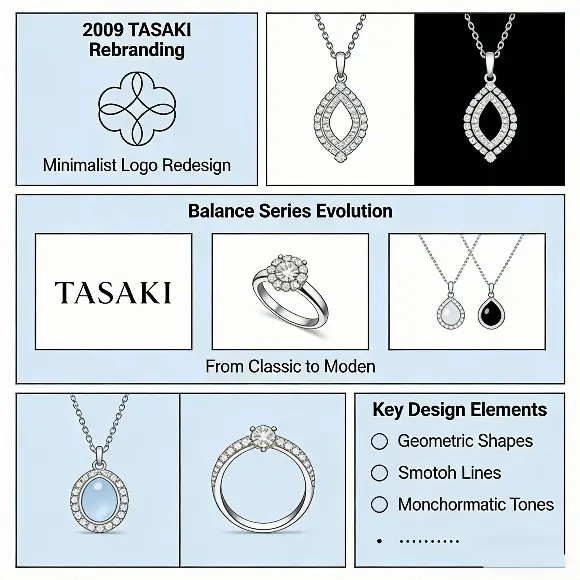
3.1. Rebranding & Youthful Revitalization (2009)
In 2009, TASAKI underwent a major rebranding, changing its name from “Tasaki Shinju” (Tasaki Pearl) to the sleek, modern “TASAKI” and hiring luxury industry veteran Hisashi Tashima as global CEO. Tashima, who had worked at Gucci, Dior, and Fendi, brought a fresh perspective, focusing on brand rejuvenation and design innovation.
The brand also hired acclaimed New York designer Thakoon Panichgul as creative director, who created TASAKI’s iconic Balance Series—a minimalist collection that blended pearls with sleek gold bars, breaking the stereotype that pearls were only for formal occasions. This collection became a global sensation, worn by celebrities and featured in top fashion publications, and remains a cornerstone of TASAKI’s lineup today. To understand the difference between TASAKI’s fine jewelry and trend-focused fashion pieces, read the costume jewelry truth guide.
3.2. Overseas Expansion & Design Innovation
Following its rebranding, TASAKI accelerated its global expansion, opening boutiques in major cities across Asia, Europe, and the United States. By 2016, the brand operated 124 retail stores worldwide, with a strong presence in China—where it quickly became a favorite among luxury shoppers, even earning a reputation as a must-buy souvenir for visitors to Japan.
During this period, TASAKI continued to innovate, launching collections like the Danger Series and Chants Collection, which pushed the boundaries of pearl jewelry design with bold, sculptural shapes. The brand also expanded its product range to include watches and leather goods, solidifying its status as a comprehensive luxury house and enriching the story of What is the history of TASAKI.
4. Modern Era & Future Outlook: What is the history of TASAKI in the 2020s?
The most recent chapter in TASAKI’s history is marked by new ownership, continued global growth, and a commitment to preserving its legacy while embracing the future. This era has solidified TASAKI’s position as one of the world’s leading Japanese luxury jewelry brands and brings the story of What is the history of TASAKI to the present day.
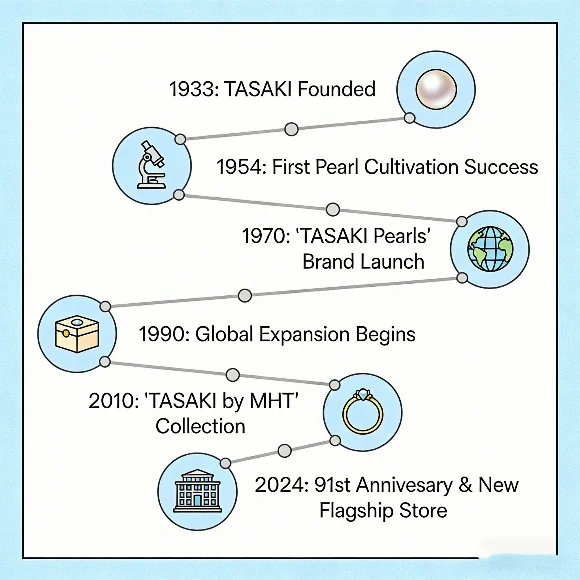
In 2017, TASAKI was taken private by its then-owner, South Korean private equity firm MBK Partners, as part of a strategic move to focus on long-term growth without the pressure of public market expectations. The brand continued to thrive, expanding its presence in China and other key markets, and in 2018, it acquired Japanese jewelry brand AHKAH to diversify its portfolio.
In 2024, TASAKI entered a new era when it was acquired by Chinese private equity firm FountainVest Partners and Japanese fund Unison Capital for approximately 100 billion yen (around 485 million USD). The new owners announced plans to expand TASAKI’s global footprint further, with a focus on growing its overseas retail stores and potentially listing the brand publicly again in the future.
Today, TASAKI remains true to its roots, operating its original pearl farms in Japan and maintaining the same rigorous quality standards that defined its early days. It continues to blend traditional pearl craftsmanship with modern design, appealing to both seasoned luxury collectors and younger shoppers seeking versatile, stylish jewelry, and this balance is the final piece of What is the history of TASAKI.
Conclusion
When answering What is the history of TASAKI, it’s clear that the brand’s journey is one of passion, innovation, and adaptability. From its humble beginnings as a pearl farming family in 1933 to its current status as a global luxury icon, TASAKI has consistently pushed the boundaries of pearl jewelry, while staying true to its commitment to quality and craftsmanship.
TASAKI’s history is defined by key milestones: reviving Mabe pearls, becoming Japan’s only De Beers Sightholder, rebranding to appeal to modern audiences, and expanding globally. Each step has shaped the brand into what it is today—a brand that honors its Japanese heritage while embracing global luxury trends, and every milestone adds depth to What is the history of TASAKI.
Whether you’re a jewelry history enthusiast, a pearl lover, or a luxury shopper, TASAKI’s history offers a fascinating look at how a small family-owned pearl farm can evolve into a beloved global brand, all while preserving the artistry and innovation that made it unique and answering the question of What is the history of TASAKI fully.
Related Reading
For affordable luxury jewelry alternatives that capture the elegance of TASAKI’s designs at a lower price point, check the gold filled jewelry guide. For more insights into how top jewelry brands build and maintain their legacies, revisit the Pandora jewelry real guide.
- Is TASAKI a Good Brand? 2026 Guide to Japanese Pearl Luxury - Post Date: 2026-04-01
- Is Pandora a Luxury Brand: Clear Facts & Brand Positioning - Post Date: 2026-03-29
- What is Permanent Jewelry? The Best Guide 2026 - Post Date: 2026-03-26
- Is Van Cleef made out of real gold - Post Date: 2026-03-19
- Why is Harry Winston jewelry so expensive - Post Date: 2026-03-19
- What country is Bvlgari from?Is Bulgari a subsidiary of Louis Vuitton? - Post Date: 2026-03-19
- What happened to Tiffany from the 80s - Post Date: 2026-03-19
- Which is more luxury Cartier or Tiffany - Post Date: 2026-03-19
- What is the cheapest jewelry at Cartier - Post Date: 2026-03-19
- What is the most expensive Cartier jewelry - Post Date: 2026-03-19
- Why is Cartier so expensive?What is special about Cartier? - Post Date: 2026-03-15
- skyworth tv is what brand?skyworth tv is it easy to use for? - Post Date: 2026-03-11
- Why is Van Cleef so expensive?Is Cartier or Van Cleef cheaper? - Post Date: 2026-03-17
- Why is Graff so expensive?Is Graff a high-end jewelry brand? - Post Date: 2026-03-18
- Is Cartier worth the money?Which is more expensive cartier or bvlgari jewelry? - Post Date: 2026-03-17
- 925 Silver vs Stainless Steel Jewelry - Post Date: 2026-03-20
- Is Bulgari a Luxury Brand?Is Bulgari higher than Cartier? - Post Date: 2026-03-18
- Why is Tiffany so expensive now?Is Tiffany considered a luxury brand? - Post Date: 2026-03-17
- Dreame brand is from which country?Is Dreame owned by Xiaomi? - Post Date: 2026-03-15
- How does the Pigeon brand ensure product safety - Post Date: 2026-03-17
- Why are Mikimoto so expensive? The Iconic Luxury Pearl Legacy - Post Date: 2026-04-01
- Is TASAKI a Good Brand? 2026 Guide to Japanese Pearl Luxury - Post Date: 2026-04-01
- What makes Fred jewelry unique? 2026 French Luxury Brand Guide - Post Date: 2026-04-01
- Is Fred jewelry worth it? 2026 Luxury Value & French Craftsmanship Guide - Post Date: 2026-04-01
- Which country made Fred jewelry? The Complete French Luxury Story 2026 - Post Date: 2026-04-01
- Why are diamonds so expensive De Beers? Honest 2026 Market Impact Guide - Post Date: 2026-04-01
- Does De Beers sell jewelry? Honest & Definitive 2026 Retail & Product Guide - Post Date: 2026-04-01
- Is De Beers a luxury brand? Ultimate Luxury Brand Analysis 2026 - Post Date: 2026-04-01
- Is Gorjana Jewelry Waterproof? Full Water Resistance Guide 2026 - Post Date: 2026-04-01
- How does Fred jewelry compare to Cartier? 2026 Luxury Jewelry Showdown - Post Date: 2026-04-01