
925 Sterling Silver Care: The Ultimate Guide to Cleaning & Prevention
Need expert 925 sterling silver care? Discover how to clean sterling silver at home safely and prevent tarnish using our science-backed guide.
Have you ever pulled out your favorite silver necklace for a special occasion, only to find it’s turned dull gray or completely black?
Maintaining that original luster requires a proactive approach to 925 sterling silver care.
As a certified gemologist with 15 years of experience restoring antique and modern silver jewelry at Dianw8, I’ve seen thousands of pieces…
This science-backed guide will teach you the essentials of 925 sterling silver care, including how to clean sterling silver at home safely and prevent tarnish using professional methods.
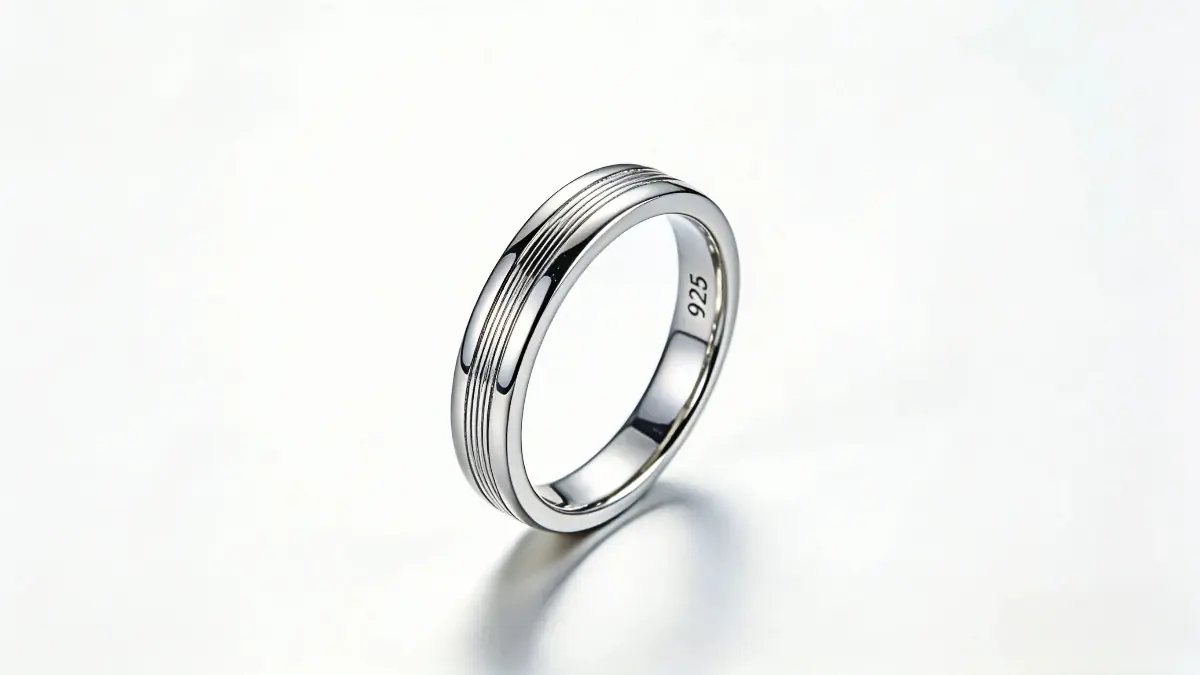
Before you dive into the cleaning process, the very first step of 925 sterling silver care is confirming that your jewelry is indeed genuine. Using aggressive cleaning methods on silver-plated or fake jewelry can cause irreversible damage.
How to Identify Your Silver: The Hallmark Check
Professional jewelers use “hallmarks” to certify the purity of the metal. To ensure your piece is real 925 sterling silver, look for these tiny engravings using a magnifying glass:
- Standard Marks: Look for “925”, “.925”, or “S925”.
- Text Marks: Authentic pieces may also be stamped with “Sterling”, “Ster”, or “925 Sterling”.
- Where to Look: Check the clasp of a necklace, the inside band of a ring, or the small jump ring near the closure of a bracelet.
Note: If your jewelry is marked with “EP”, “EPNS”, or “HGE”, it is likely silver-plated, not solid 925 sterling silver, and requires much gentler care.
Why Does 925 Sterling Silver Turn Black?
One common myth is that if your jewelry turns black, it must be fake. In reality, tarnishing is a natural characteristic of real 925 sterling silver. Because it contains 7.5% alloy (usually copper), it reacts with the environment. If your jewelry never changed color at all, it might actually be stainless steel or silver-plated plastic.
Understanding the science behind tarnish is the first step to proper 925 sterling silver care. Most people get this completely wrong, which is why their cleaning methods fail.
Contrary to popular belief, silver does not tarnish from oxidation. The black discoloration you see is actually silver sulfide (Ag₂S), formed through a chemical reaction called sulfidation.
This reaction occurs when silver comes into contact with hydrogen sulfide (H₂S), a colorless gas found in air pollution, volcanic areas, and even certain foods like eggs.
The balanced chemical equation for this reaction is: 4Ag + 2H₂S + O₂ → 2Ag₂S + 2H₂O.
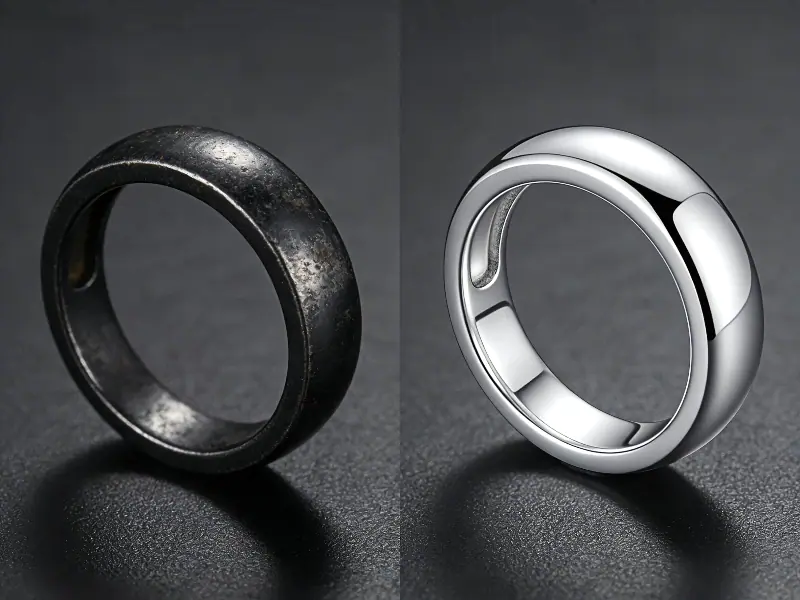
Comparison showing the thick black layer of silver sulfide (Ag2S) on a 925 sterling silver ring (left) and the restored original luster after professional cleaning (right).
Unlike rust on iron, which causes permanent structural damage, tarnish only forms on the outermost layer of silver. This means it can be completely removed without harming the underlying metal.
In my studio, I’ve seen pieces tarnish completely in just 2 hours after exposure to high sulfur environments. The most common culprit? A weekend trip to a natural hot spring.
The 7.5% copper content in 925 sterling silver is both its greatest strength and its biggest weakness when it comes to tarnishing.
Pure silver (99.9% fine silver) is far too soft for everyday jewelry. It bends easily, scratches easily, and delicate details wear away quickly with regular use.
Adding 7.5% copper creates an alloy that is strong, durable, and perfect for everyday wear. However, copper is much more chemically reactive than pure silver.
This increased reactivity accelerates the sulfidation process, which is why 925 sterling silver tarnishes faster than fine silver.
The copper also reacts with your skin’s natural oils and acidity, which is why some people experience green discoloration on their skin when wearing silver jewelry.
While the 7.5% copper content makes 925 silver durable, it’s also the reason why some people with highly sensitive skin experience reactions. If you find that your skin turns green even with proper care, you might consider hypoallergenic alternatives like stainless steel, which is man-made and resistant to such chemical reactions.
925 Sterling Silver vs. Fine Silver Care
The type of silver your jewelry is made from directly determines how you should care for it. Using the wrong methods can cause permanent damage.
Fine silver (99.9% pure) requires much less aggressive cleaning than 925 sterling silver. It tarnishes more slowly and has a softer, warmer white color.
Because fine silver is so soft, you should never use abrasive cleaners or scrub too hard. Even a soft-bristled toothbrush can leave permanent scratches on fine silver.
925 sterling silver, on the other hand, is much more durable and can withstand slightly more aggressive cleaning methods. However, it still requires gentle handling to avoid scratches.
Plated silver jewelry requires the most delicate care of all. The thin layer of silver will wear away with repeated polishing, exposing the base metal underneath.
Once the plating is gone, the base metal will tarnish quickly and cannot be restored to its original appearance. For plated pieces, prevention is far more important than cleaning.
The “Silver Killers”: Daily Scenarios to Avoid
The best way to deal with tarnish is to prevent it from forming in the first place. These are the four most common situations that will turn your silver black overnight.
Swimming Pools & Hot Springs
Swimming pools and hot springs are the absolute worst environments for 925 sterling silver jewelry.
Chlorine in swimming pools reacts with both the silver and copper in the alloy, causing corrosion and pitting. Over time, repeated exposure can weaken chains and cause them to break.
Hot springs contain extremely high levels of sulfur, which can turn your silver completely black in just a few hours. I’ve had clients bring in pieces that were unrecognizable after a single soak.
Rule #1: Always remove all silver jewelry before swimming, soaking in a hot tub, or visiting a hot spring.
What to Do if You Accidentally Shower with Silver
We’ve all forgotten to take off our jewelry at least once. If you accidentally wore your 925 silver necklace in the shower, don’t panic—it’s not ruined. However, you must <strong>dry it immediately</strong> with a soft, lint-free cloth. Focus on the clasp and any small crevices where soap and shampoo residue might be trapped. This quick action prevents long-term moisture from accelerating the sulfidation process.
Fitness & Sweating
Your sweat contains salt, ammonia, and uric acid, all of which accelerate the tarnishing process.
When you work out, sweat builds up on the surface of your jewelry and traps moisture and sulfur against the metal. This creates the perfect environment for sulfidation to occur.
The friction from your clothes and equipment can also cause scratches and damage to delicate pieces.
Rule #2: Remove all silver jewelry before hitting the gym, going for a run, or doing any activity that will make you sweat heavily.
Cosmetics & Perfumes
Perfume, hairspray, lotion, and makeup all contain chemicals that can damage your silver jewelry.
These products leave behind a residue that builds up on the surface of your jewelry, trapping moisture and sulfur against the metal. This residue also attracts dirt and makes your jewelry look dull.
Beyond just moisture, the real danger in the bathroom comes from invisible chemical residues. Soap, shampoo, and conditioner leave a film that traps moisture against the metal, making it look cloudy and dull much faster than air exposure alone.
Some cosmetics even contain sulfur compounds that will cause immediate tarnishing when they come into contact with silver.
Rule #3: Always put your silver jewelry on last, after you’ve finished applying all your beauty products. And take it off first when you get home.
Strategic Storage: Keeping Air Away
Proper storage is the single most effective way to prevent tarnish when you’re not wearing your jewelry. Most people store their silver incorrectly, which is why it tarnishes so quickly.
Tarnish forms when silver comes into contact with air and moisture. The goal of proper storage is to create a physical barrier between your jewelry and the air.
Airtight plastic bags are the best storage solution for silver jewelry. They seal out air and moisture, significantly reducing the amount of hydrogen sulfide that comes into contact with the metal.
Unlike industrial metals like stainless steel, 925 sterling silver is a precious metal that is relatively soft. This is why separate storage (as shown in the image below) is crucial to prevent scratches and bending that harder metals wouldn’t face.
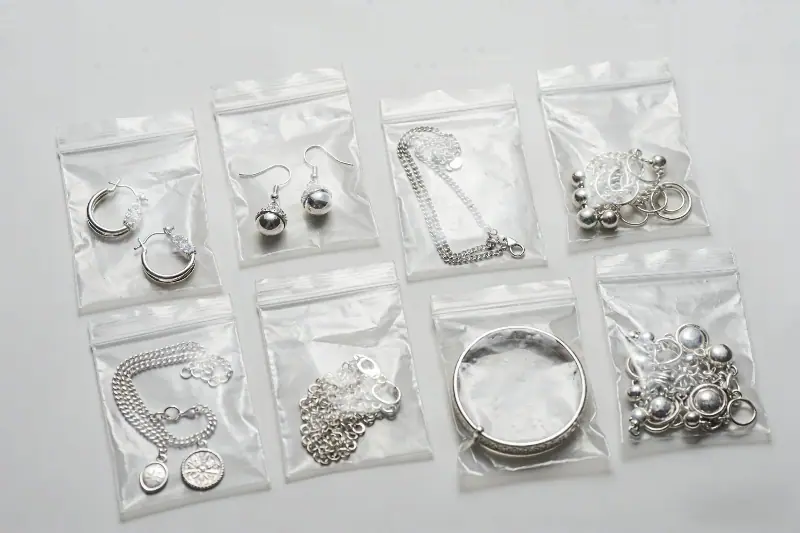
An example of strategic storage using airtight bags to isolate each 925 sterling silver piece from air and moisture.
When using airtight bags:
• Squeeze out as much air as possible before sealing
• Store each piece separately to prevent scratches
• Avoid using bags with PVC, as they can release chemicals that cause tarnishing
Anti-tarnish strips are an excellent addition to your storage routine. These small strips are treated with chemicals that absorb hydrogen sulfide from the air.
Place one strip in each jewelry box or storage bag to keep your silver tarnish-free for up to 6 months. Replace the strips when they turn dark brown or black.
You should also store your silver jewelry in a cool, dark place. Sunlight and heat accelerate the chemical reactions that cause tarnishing.
Avoid storing your silver in the bathroom, as the high humidity creates the perfect environment for tarnish to form.
How to Clean 925 Sterling Silver at Home
Even with the best prevention habits, your silver will eventually develop some tarnish. These three proven methods will safely remove tarnish without scratching your jewelry.
The Aluminum Foil & Baking Soda Method
After testing dozens of cleaning methods in my laboratory, I can confidently say this is the gold standard of 925 sterling silver care for heavily tarnished pieces.
This method works through a process called electrolysis. The aluminum foil acts as an anode, and the silver acts as a cathode. The baking soda acts as an electrolyte, allowing electrons to flow between the two metals.
During the reaction, the aluminum gives up electrons to the silver sulfide, converting it back into pure silver. The sulfur then combines with the aluminum to form aluminum sulfide, which dissolves in the water.
This means the tarnish is not just scrubbed off—it’s chemically converted back into silver, leaving no scratches behind.
Step-by-Step Instructions:
1. Line a glass or plastic bowl with aluminum foil, shiny side up
2. Place your tarnished silver jewelry on the foil, ensuring each piece makes direct contact
3. Sprinkle 1-2 tablespoons of baking soda over the jewelry
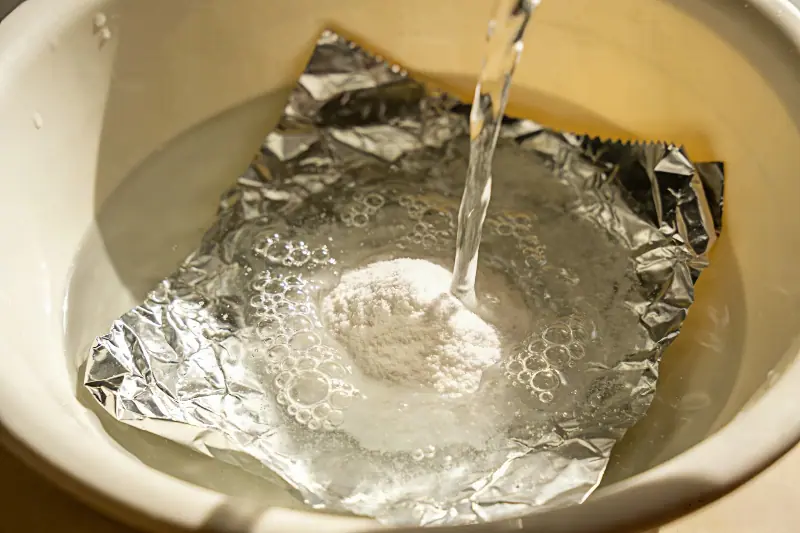
4. Carefully pour boiling water over the mixture until the jewelry is completely submerged
5. Let soak for 2-5 minutes (heavily tarnished pieces may need up to 10 minutes)
6. Remove with tongs, rinse thoroughly under running water
7. Dry completely with a soft, lint-free cloth
Important Note: Do not use this method on jewelry with porous gemstones like pearls, opals, emeralds, or turquoise. The hot water and chemical reaction can damage these stones.
Mild Dish Soap & Warm Water
For pieces with delicate gemstones or only light tarnish, the baking soda method may be too harsh. A mild dish soap solution is gentle enough for almost all types of silver jewelry.
This method works by breaking down the oils and dirt that trap sulfur against the silver surface. It won’t remove heavy tarnish, but it’s perfect for regular maintenance.
Step-by-Step Instructions:
1. Fill a small bowl with warm (not hot) water
2. Add a few drops of mild, phosphate-free dish soap and stir gently
3. Place your jewelry in the soapy water and let soak for 5-10 minutes
4. Use a soft-bristled baby toothbrush to gently scrub crevices and detailed areas
5. Rinse thoroughly under running water
6. Dry immediately with a soft, lint-free cloth
I recommend doing this gentle cleaning every 1-2 weeks for jewelry that you wear daily. It will help prevent tarnish from building up and keep your pieces looking shiny.
Using a Professional Polishing Cloth
A professional silver polishing cloth is the most convenient tool for maintaining the shine of your silver between deep cleanings.
These cloths are made of soft cotton impregnated with a mild abrasive and polishing compound that removes light tarnish and restores shine.
The correct technique: Gently wipe the surface of your silver in long, straight strokes, following the direction of the metal’s grain.
Never rub in circular motions or apply too much pressure, as this can cause scratches. After polishing, use a clean, dry part of the cloth to buff to a bright shine.
Silver polishing cloths cannot be washed, as washing will remove the polishing compound. Replace your cloth when it turns completely black and no longer removes tarnish.
Professional Tools & When to Use Them
While the DIY methods above work well for most cases, there are some professional tools that you should either use with extreme caution or avoid entirely.
Silver dips, also known as silver cleaners, are liquid solutions that claim to remove tarnish in seconds. While they work quickly, they are extremely harsh and can permanently damage your jewelry.
Silver dips contain strong acids that etch the surface of the silver, making it more porous and prone to future tarnishing. They can also dissolve the solder used to hold jewelry together.
I have seen countless pieces ruined by silver dips, with pitted surfaces, loose gemstones, and a dull, lifeless appearance that cannot be restored.
My recommendation: Avoid silver dips entirely. The aluminum foil method is just as fast and much safer for your jewelry.
Ultrasonic cleaners use high-frequency sound waves to create tiny bubbles that remove dirt and tarnish from hard-to-reach places.
While they are safe for solid gold and platinum jewelry, they can be dangerous for silver jewelry with gemstones. The vibrations can crack or chip porous stones like pearls, opals, and emeralds.
Ultrasonic cleaners can also loosen the prongs that hold gemstones in place, increasing the risk of losing a stone.
My recommendation: Only use an ultrasonic cleaner on solid silver pieces with no gemstones. For any piece with stones, stick to the dish soap method.
Restoring Damaged Silver: When to See a Jeweler
While most tarnish can be removed at home, there are some cases where you’ll need to take your jewelry to a professional jeweler.
Many 925 sterling silver pieces are plated with a thin layer of rhodium, a precious metal in the platinum family. Rhodium plating gives silver a bright, white finish and provides a protective barrier against tarnish.
Over time, the rhodium plating will wear off with regular use, exposing the underlying silver. When this happens, your jewelry will start to look dull and tarnish more quickly.
A professional jeweler can re-plate your jewelry with rhodium, restoring its original shine and protective barrier. The cost typically ranges from $20 to $50 for most pieces.
Professional re-polishing is another service that jewelers offer to restore the shine of silver jewelry.
During re-polishing, the jeweler uses a rotating buffing wheel with a polishing compound to remove a thin layer of metal from the surface. This removes scratches, dents, and deep tarnish.
However, it’s important not to re-polish your jewelry too often. Each polishing removes a small amount of silver, and over time, it can thin out the metal and weaken the piece.
I recommend getting your silver jewelry re-polished no more than once every two years to preserve its integrity.
Frequently Asked Questions
Can I wear 925 sterling silver in the shower?
No, you should never wear 925 sterling silver in the shower. Shower water contains minerals, soap, and shampoo residue that build up on your jewelry and trap moisture against the metal. The high humidity in the bathroom also accelerates tarnishing. Even if you don’t get your jewelry wet, leaving it in the bathroom while you shower can cause it to tarnish faster.
Does 925 sterling silver rust?
No, 925 sterling silver does not rust. Rust is iron oxide, which only forms on iron and steel. The black discoloration you see on silver is tarnish (silver sulfide), not rust. Unlike rust, tarnish is only a surface layer and can be completely removed without damaging the underlying metal.
Can I wear 925 sterling silver every day?
Yes, 925 sterling silver is durable enough for everyday wear. However, you should follow the care guidelines in this guide to prevent tarnishing and damage. Remove your jewelry before swimming, working out, showering, and applying cosmetics. Clean it regularly and store it properly when not in use. With proper care, your silver jewelry can last a lifetime.
Why does 925 sterling silver turn my skin green?
The green discoloration is caused by the 7.5% copper content in the 925 sterling silver alloy. When copper comes into contact with your skin’s natural oils, sweat, and acidity, it can react to form copper salts, which are green in color. This reaction is more common in people with naturally acidic skin. To prevent it, keep your jewelry clean and dry, and apply a clear nail polish to the inside of rings and bracelets to create a barrier.
Does 925 silver always have a stamp?
Yes, reputable jewelers always include a stamp like 925 or ‘Sterling’ to guarantee purity, although on very old or handmade pieces, it might be worn down.
Final Thoughts
Mastering 925 sterling silver care doesn’t have to be complicated. It all comes down to understanding why 925 sterling silver tarnishes and following a few simple science-backed rules.
By avoiding the common silver killers, storing your jewelry properly, and cleaning it with the right methods, you can keep your favorite silver pieces looking shiny and beautiful for years to come.
Remember: prevention is always better than cure. Following the 92.5% purity standards and a little bit of regular care will save you hours of cleaning later.
Now that your jewelry is shining again, you’ll want to keep it that way. Check out our expert tips on [How To Prevent 925 Silver From Tarnishing] to save yourself from frequent deep cleanings.
- What’s The Difference Between Silver & Sterling Silver - Post Date: 2026-03-22
- What To Check When Buying Sterling Silver - Post Date: 2026-03-21
- Is 925 Sterling Silver Expensive - Post Date: 2026-03-20
- Is 925 Sterling Silver Hypoallergenic - Post Date: 2026-03-20
- Is 925 Sterling Silver Real Silver - Post Date: 2026-03-20
- How To Clean Sterling Silver Jewelry - Post Date: 2026-03-19
- Can You Shower With 925 Sterling Silver Jewelry - Post Date: 2026-03-19
- Can You Sleep With 925 Sterling Silver Jewelry? - Post Date: 2026-03-19
- Does 925 Sterling Silver Tarnish? Why It Happens & How to Fix It - Post Date: 2026-03-19
- Is 925 Sterling Silver Waterproof? Can You Shower With It? - Post Date: 2026-03-19
- Why is Cartier so expensive?What is special about Cartier? - Post Date: 2026-03-15
- skyworth tv is what brand?skyworth tv is it easy to use for? - Post Date: 2026-03-11
- Why is Van Cleef so expensive?Is Cartier or Van Cleef cheaper? - Post Date: 2026-03-17
- Why is Graff so expensive?Is Graff a high-end jewelry brand? - Post Date: 2026-03-18
- Is Cartier worth the money?Which is more expensive cartier or bvlgari jewelry? - Post Date: 2026-03-17
- 925 Silver vs Stainless Steel Jewelry - Post Date: 2026-03-20
- Is Bulgari a Luxury Brand?Is Bulgari higher than Cartier? - Post Date: 2026-03-18
- Why is Tiffany so expensive now?Is Tiffany considered a luxury brand? - Post Date: 2026-03-17
- Dreame brand is from which country?Is Dreame owned by Xiaomi? - Post Date: 2026-03-15
- How does the Pigeon brand ensure product safety - Post Date: 2026-03-17
- Cartier vs Van Cleef & Arpels: Which Jewelry Holds Value Better in 2026? - Post Date: 2026-04-06
- Fred Force 10 Bracelet Guide: Sizing, Price & Vintage Options - Post Date: 2026-04-05
- Is David Morris a luxury brand? Timeless Craftsmanship That Defines Elite Luxury - Post Date: 2026-04-04
- Who is the designer of Belperron jewelry? The Visionary Who Redefined Luxury - Post Date: 2026-04-04
- What makes Belperron jewelry unique? Fascinating Design Secrets Collectors Adore - Post Date: 2026-04-04
- Is Fred Jewelry under LVMH? Clear Ownership & Brand History Guide - Post Date: 2026-04-04
- Why is Boucheron so Expensive? Craftsmanship & Series That Justify the Price - Post Date: 2026-04-04
- Is Boucheron or Mellerio Older? Fascinating Age Comparison of Iconic Brands - Post Date: 2026-04-04
- When was Boucheron Founded? Fascinating Historical Origins Revealed - Post Date: 2026-04-04
- Is Boucheron a Luxury Brand? Expert Verdict & Analysis - Post Date: 2026-04-04