
Is Mejuri Good Jewelry? Honest Quality, Materials & Durability Review
Many wonder is Mejuri good jewelry for everyday wear, and the answer is yes—its solid 14k gold and sterling silver pieces offer reliable quality, while vermeil styles vary in long-term durability.
Many shoppers looking for reliable everyday pieces ask is Mejuri good jewelry that offers real quality and long term value. The answer is yes for most of its collections, and anyone researching is Mejuri good jewelry will find consistent feedback about solid construction and modern design. Mejuri provides consistent craftsmanship, ethical materials, and stylish pieces at accessible prices, making it a top choice for people who want to know is Mejuri good jewelry for regular use.
The brand uses a direct to consumer model to cut unnecessary retail markups, allowing customers to get fine jewelry quality without the high prices of traditional luxury brands. While some delicate or gold vermeil pieces require extra care, the overall construction and finish confirm that Mejuri is good jewelry for daily wear and casual luxury.
1. Is Mejuri good jewelry in terms of material quality
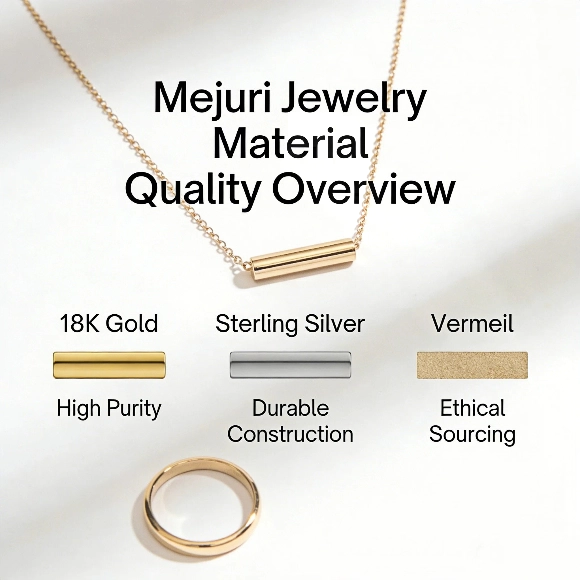
1.1. Solid 14k gold and sterling silver construction
Mejuri uses high quality solid 14k gold and 925 sterling silver across its core collections, with a large portion of materials coming from recycled sources. These metals are durable, hypoallergenic, and resistant to regular wear, making them suitable for long term daily use. Solid gold pieces maintain their color and structure without fading, while sterling silver offers reliable shine and strength when properly cared for.
This material standard is a major reason why Mejuri is good jewelry for anyone seeking pieces that last beyond fast fashion alternatives. The brand follows industry standards for metal purity and ensures consistent composition across all production batches. When evaluating is Mejuri good jewelry, the quality of base materials is one of the strongest points in its favor.
As featured by ELLE Magazine, Mejuri’s material choices balance luxury, sustainability, and practicality better than many similar brands in the demi fine category.
1.2. Gold vermeil quality and durability
Most of Mejuri’s gold vermeil items use a thicker plating layer than the industry minimum, which improves longevity and reduces premature tarnishing. The vermeil is applied over solid sterling silver, creating a hypoallergenic piece that looks like solid gold at a lower cost.
While vermeil will naturally wear over time with heavy use, it still holds up significantly better than basic gold plated jewelry. This makes Mejuri good jewelry for people who want the look of gold without the higher investment. Even with this more affordable line, the answer to is Mejuri good jewelry remains positive for most buyers.
If you want to learn more about protecting silver based jewelry, you can read can you shower with 925 sterling silver jewelry for useful care tips.
1.3. Diamonds and gemstone standards
Mejuri uses both natural and lab grown diamonds that meet consistent clarity and color grades for a bright, attractive appearance. All diamonds are conflict free and sourced responsibly, with lab grown options offering an eco friendly alternative.
Gemstones are securely set and selected for durability, ensuring they do not loosen or chip easily with regular wear. The quality of stones further supports that Mejuri is good jewelry for both everyday styling and occasional special wear. Anyone asking is Mejuri good jewelry will appreciate the careful selection of stones used across its collections.
2. Craftsmanship and design reliability
2.1. Everyday focused design and comfort
Every Mejuri design is created with daily wear in mind, focusing on comfort, lightweight feel, and versatile styling. The brand avoids overly delicate structures that break easily, while keeping shapes modern and minimalist.
Edges are smooth, clasps are secure but easy to handle, and proportions work well for layering or standalone wear. This practical design approach is another reason Mejuri is good jewelry for regular use. When people ask is Mejuri good jewelry, they often mean whether it is comfortable enough to wear all day, and the answer is yes.
2.2. Finishing and production consistency
Production quality remains consistent across most Mejuri lines, with uniform polishing, clean settings, and secure closures. Items are inspected before shipping to reduce defects, and the brand offers reasonable support for manufacturing issues.
While very thin chains or tiny charms may require gentle handling, the majority of pieces show solid workmanship that reinforces Mejuri is good jewelry for the price point. This level of consistency is exactly what shoppers expect when researching is Mejuri good jewelry for long term use.
3. Real world durability and customer experience
3.1. Long term performance of core pieces
Customer feedback consistently shows that Mejuri’s solid gold and silver pieces maintain their appearance for years with basic care. Many users wear these items continuously without significant tarnish, scratch, or deformation.
This real world reliability confirms that Mejuri is good jewelry for anyone building a long term jewelry collection. The brand’s most popular styles are specifically engineered to withstand busy lifestyles, which is why so many people confirm is Mejuri good jewelry for daily life.
3.2. Care requirements for delicate items
Vermeil and very thin designs need more maintenance to preserve their look, including avoiding water, chemicals, and excessive friction. These limitations are normal for the category and do not mean Mejuri is bad jewelry, only that certain pieces need gentle use.
With proper storage and cleaning, even the more delicate Mejuri items can stay in great condition for a long time. For more details on identifying real precious metals, you can check how to check if gold is real.
4. Value and ethical positioning
4.1. Pricing compared to quality
Mejuri’s pricing is fair for the materials and craftsmanship it delivers. The direct to consumer model allows lower prices while maintaining fine jewelry level materials, which is why many reviewers conclude Mejuri is good jewelry for the cost.
Compared to department store brands, Mejuri often provides better materials at similar or lower prices, making it a strong value choice. For budget conscious shoppers asking is Mejuri good jewelry, the price to quality ratio makes it an easy recommendation.
4.2. Ethical and sustainable practices
The brand uses recycled metals, responsibly sourced stones, and transparent supply chain practices. These ethical choices add to the overall value and make Mejuri good jewelry for conscious consumers.
Leading publications including British Vogue have recognized Mejuri for its balanced approach to sustainability and accessibility in fine jewelry. This ethical focus strengthens the case for anyone wondering is Mejuri good jewelry from a responsible brand.
5. Overall verdict on Mejuri jewelry quality
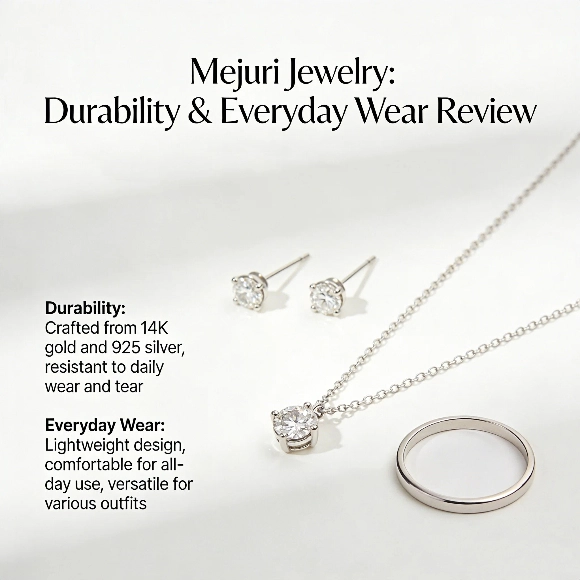
Overall, Mejuri is good jewelry that delivers reliable quality, modern design, and strong value for people seeking everyday fine jewelry. Its solid metal collections offer excellent longevity, while vermeil styles provide an affordable luxury option.
The brand is not positioned as high luxury, but it consistently outperforms typical fashion jewelry in material, construction, and durability. For most buyers, Mejuri meets and exceeds expectations for accessible, wearable, and attractive jewelry.
Whether you are buying studs, hoops, necklaces, or stackable rings, the overall quality confirms that Mejuri is good jewelry for daily style and long term use. For more information on jewelry care and maintenance, you can explore is 925 sterling silver real silver.
- Is Mejuri or Gorjana Better? 2026 Honest & Detailed Comparison Guide - Post Date: 2026-03-31
- What Celebrities Wear Mejuri? The Best Star Style Guide 2026 - Post Date: 2026-03-30
- Does Mejuri Use Real Gold? The Definitive Answer 2026 - Post Date: 2026-03-30
- Does Mejuri Make Custom Jewelry? The Honest Truth 2026 - Post Date: 2026-03-30
- Why is Mejuri so expensive now - Post Date: 2026-03-30
- Is Mejuri a Japanese Company? Full Brand Origin & History Guide - Post Date: 2026-03-30
- Is David Morris a luxury brand? Timeless Craftsmanship That Defines Elite Luxury - Post Date: 2026-04-04
- What makes Belperron jewelry unique? Fascinating Design Secrets Collectors Adore - Post Date: 2026-04-04
- Why is Boucheron so Expensive? Craftsmanship & Series That Justify the Price - Post Date: 2026-04-04
- When was Boucheron Founded? Fascinating Historical Origins Revealed - Post Date: 2026-04-04
- Why is Cartier so expensive?What is special about Cartier? - Post Date: 2026-03-15
- skyworth tv is what brand?skyworth tv is it easy to use for? - Post Date: 2026-03-11
- Why is Van Cleef so expensive?Is Cartier or Van Cleef cheaper? - Post Date: 2026-03-17
- Why is Graff so expensive?Is Graff a high-end jewelry brand? - Post Date: 2026-03-18
- Is Cartier worth the money?Which is more expensive cartier or bvlgari jewelry? - Post Date: 2026-03-17
- 925 Silver vs Stainless Steel Jewelry - Post Date: 2026-03-20
- Is Bulgari a Luxury Brand?Is Bulgari higher than Cartier? - Post Date: 2026-03-18
- Why is Tiffany so expensive now?Is Tiffany considered a luxury brand? - Post Date: 2026-03-17
- Dreame brand is from which country?Is Dreame owned by Xiaomi? - Post Date: 2026-03-15
- How does the Pigeon brand ensure product safety - Post Date: 2026-03-17
- Fred Force 10 Bracelet Guide: Sizing, Price & Vintage Options - Post Date: 2026-04-05
- Is David Morris a luxury brand? Timeless Craftsmanship That Defines Elite Luxury - Post Date: 2026-04-04
- Who is the designer of Belperron jewelry? The Visionary Who Redefined Luxury - Post Date: 2026-04-04
- What makes Belperron jewelry unique? Fascinating Design Secrets Collectors Adore - Post Date: 2026-04-04
- Is Fred Jewelry under LVMH? Clear Ownership & Brand History Guide - Post Date: 2026-04-04
- Why is Boucheron so Expensive? Craftsmanship & Series That Justify the Price - Post Date: 2026-04-04
- Is Boucheron or Mellerio Older? Fascinating Age Comparison of Iconic Brands - Post Date: 2026-04-04
- When was Boucheron Founded? Fascinating Historical Origins Revealed - Post Date: 2026-04-04
- Is Boucheron a Luxury Brand? Expert Verdict & Analysis - Post Date: 2026-04-04
- Is Damiani a Luxury Brand? A Complete Expert Analysis - Post Date: 2026-04-04