How To Clean Diamond Jewelry
How To Clean Diamond Jewelry: This guide shares safe, easy home methods to restore diamond sparkle, including soap cleaning, soaking tips and care habits to protect your jewelry.
How To Clean Diamond Jewelry is an essential skill for anyone who owns diamond rings, necklaces, and earrings. Diamonds can collect oil, dust, and dirt over time, which reduces their sparkle and brilliance. Regular, gentle cleaning can restore their shine and keep them looking brand new. In this article, we will show you safe and effective ways to clean diamond jewelry at home.
Understanding How To Clean Diamond Jewelry helps you maintain your valuable pieces without causing damage. Many people use harsh products that hurt metal settings without realizing the risk. All the methods we share are gentle, affordable, and easy to do at home. Proper cleaning will keep your diamonds bright and brilliant for many years.
Why Diamonds Lose Their Sparkle
Diamonds are very hard but also naturally oily, so they easily attract skin oils, lotion, perfume, and dust. These substances build up on the surface and under the stone, blocking light and making diamonds look dull.
Regular wear increases dirt buildup, especially for rings worn every day. Knowing what causes dullness will help you better understand How To Clean Diamond Jewelry and keep long-term brightness.
Gentle Cleaning With Soap And Warm Water
The safest and most effective way to clean diamond jewelry is using mild dish soap and warm water. This method works for all diamond pieces and will not damage precious metal settings.
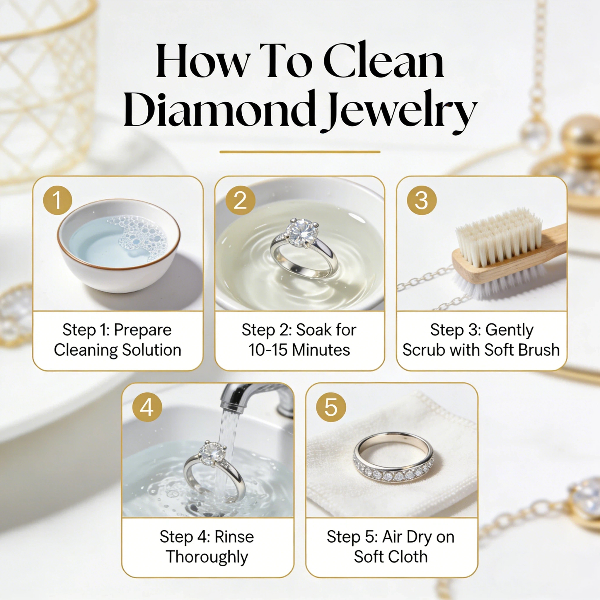
Fill a small bowl with warm water and add a small amount of gentle soap. Soak your jewelry for about 10 to 15 minutes to loosen dirt and oil. Use a soft brush to clean gently around the diamond and settings. Rinse with clean water and dry with a soft lint-free cloth. This is the most popular method for people learning How To Clean Diamond Jewelry.
Soaking For Heavy Dirt Buildup
For jewelry with heavy dirt or long-term buildup, you can extend the soaking time. Keep the jewelry in the soapy water for up to 30 minutes to dissolve oil and grime.
Do not use hard brushes or rough sponges that can scratch gold or platinum settings. Always be gentle when cleaning around prongs that hold the diamond. This simple step improves your results when learning How To Clean Diamond Jewelry.
Using A Jewelry Steam Cleaner
For regular maintenance, you can use a home jewelry steam cleaner. Steam cleaning removes dirt quickly and effectively without chemicals. It is very popular for diamond and gold jewelry.
Always check your jewelry for loose stones before using steam cleaning. Do not use steam for diamonds with fractures or inclusions. This method is efficient for people who want to know How To Clean Diamond Jewelry quickly.
What To Avoid When Cleaning Diamonds
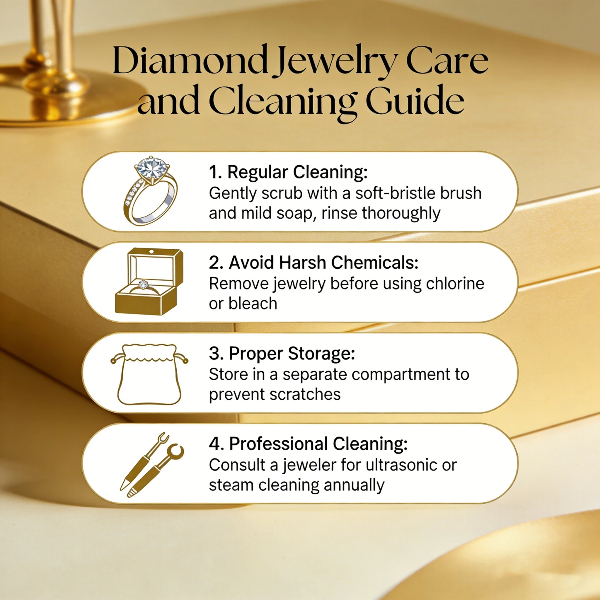
Harsh chemicals, bleach, and abrasive cleaners can damage metal settings and reduce shine. Avoid toothpaste, which is too abrasive for gold and silver.
Do not use ultrasonic cleaners for fragile or treated diamonds. Always remove diamond jewelry before swimming, showering, or using cleaning products. These habits protect your jewelry and make How To Clean Diamond Jewelry much safer.
Regular Care Tips For Diamond Jewelry
Wipe your diamond jewelry with a soft cloth after each wear to remove skin oils. Store diamonds separately to avoid scratches and damage.
Schedule professional cleaning once a year to check prongs and deep clean stones. Simple daily care reduces the need for heavy cleaning. These habits support the results you get from learning How To Clean Diamond Jewelry.
Final Thoughts on How To Clean Diamond Jewelry
Cleaning diamond jewelry is simple, safe, and affordable when you use the right methods. Mild soap and water is enough for most regular cleaning needs. Gentle and consistent care will keep your diamonds bright, shiny, and brilliant.
You do not need expensive products or professional services for daily maintenance. Taking good care of your jewelry protects its value and appearance. You now have all the practical information you need for How To Clean Diamond Jewelry.
Related Articles
- How much is Graff Diamonds worth? Honest Value Breakdown - Post Date: 2026-04-04
- Why are diamonds so expensive De Beers? Honest 2026 Market Impact Guide - Post Date: 2026-04-01
- Does De Beers sell jewelry? Honest & Definitive 2026 Retail & Product Guide - Post Date: 2026-04-01
- Is De Beers a luxury brand? Ultimate Luxury Brand Analysis 2026 - Post Date: 2026-04-01
- Is Bvlgari Jewelry Worth It? Honest Review on Value & Quality - Post Date: 2026-03-29
- How Much Is Bvlgari High Jewelry? Complete Price Guide & Breakdown - Post Date: 2026-03-29
- Moissanite vs Diamond: Full Comparison - Post Date: 2026-03-19
Popular Articles
- Why is Cartier so expensive?What is special about Cartier? - Post Date: 2026-03-15
- skyworth tv is what brand?skyworth tv is it easy to use for? - Post Date: 2026-03-11
- Why is Van Cleef so expensive?Is Cartier or Van Cleef cheaper? - Post Date: 2026-03-17
- Why is Graff so expensive?Is Graff a high-end jewelry brand? - Post Date: 2026-03-18
- Is Cartier worth the money?Which is more expensive cartier or bvlgari jewelry? - Post Date: 2026-03-17
- 925 Silver vs Stainless Steel Jewelry - Post Date: 2026-03-20
- Is Bulgari a Luxury Brand?Is Bulgari higher than Cartier? - Post Date: 2026-03-18
- Why is Tiffany so expensive now?Is Tiffany considered a luxury brand? - Post Date: 2026-03-17
- Dreame brand is from which country?Is Dreame owned by Xiaomi? - Post Date: 2026-03-15
- How does the Pigeon brand ensure product safety - Post Date: 2026-03-17
New Articles
- Fred Force 10 Bracelet Guide: Sizing, Price & Vintage Options - Post Date: 2026-04-05
- Is David Morris a luxury brand? Timeless Craftsmanship That Defines Elite Luxury - Post Date: 2026-04-04
- Who is the designer of Belperron jewelry? The Visionary Who Redefined Luxury - Post Date: 2026-04-04
- What makes Belperron jewelry unique? Fascinating Design Secrets Collectors Adore - Post Date: 2026-04-04
- Is Fred Jewelry under LVMH? Clear Ownership & Brand History Guide - Post Date: 2026-04-04
- Why is Boucheron so Expensive? Craftsmanship & Series That Justify the Price - Post Date: 2026-04-04
- Is Boucheron or Mellerio Older? Fascinating Age Comparison of Iconic Brands - Post Date: 2026-04-04
- When was Boucheron Founded? Fascinating Historical Origins Revealed - Post Date: 2026-04-04
- Is Boucheron a Luxury Brand? Expert Verdict & Analysis - Post Date: 2026-04-04
- Is Damiani a Luxury Brand? A Complete Expert Analysis - Post Date: 2026-04-04