
Is apm monaco good quality
Is apm monaco good quality? Explore APM Monaco’s materials, craftsmanship, durability, and customer feedback to determine if its jewelry lives up to the hype.
Jewelry shoppers and style enthusiasts often wonder: Is apm monaco good quality? As a prominent contemporary fashion jewelry brand, APM Monaco has built a reputation for blending elegant design with accessible luxury—but does its quality live up to the hype? This guide dives deep into APM Monaco’s materials, craftsmanship, durability, customer feedback, and quality control processes to answer Is apm monaco good quality once and for all.
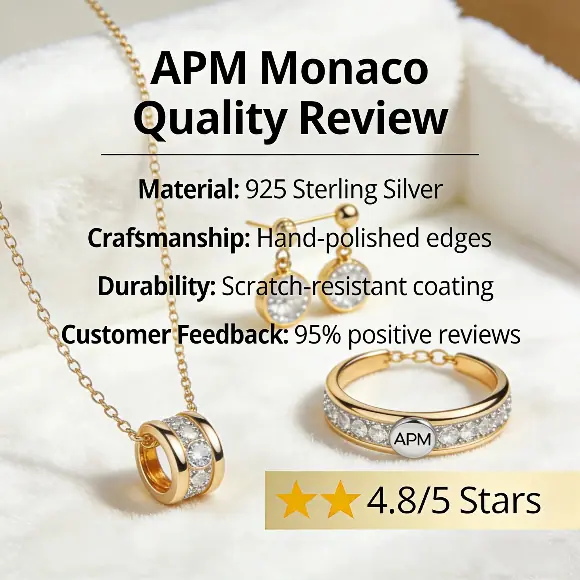
1. APM Monaco’s Quality Foundations: Materials
To evaluate Is apm monaco good quality, we first look at the materials the brand uses—an essential indicator of jewelry quality. APM Monaco prides itself on using premium materials tailored to its accessible luxury positioning, with a focus on durability and visual appeal. The brand’s core materials include 925 sterling silver (often sourced from recyclable resources), 18K gold plating (up to 3 microns thick for longevity), and high-quality cubic zirconia, along with semi-precious stones like malachite in select collections.
Unlike fast fashion jewelry that uses cheap base metals, APM Monaco’s materials are carefully selected to resist tarnishing and irritation—its alloys are nickel-free and anti-allergenic, meeting ISO 9001-2000 certification standards. While the brand does not use natural diamonds or precious gemstones (opting for cubic zirconia and semi-precious stones instead), the materials are chosen for their sparkle and durability, similar to how reputable brands like those specializing in silver jewelry for sensitive ears prioritize safe, high-quality materials.
2. Craftsmanship: Attention to Detail and Production Standards
Craftsmanship is another key factor in answering Is apm monaco good quality. APM Monaco leverages over 40 years of jewelry manufacturing expertise, with all pieces crafted in its own production facilities by skilled artisans. The brand combines traditional handcrafting techniques with modern quality control, ensuring each piece meets strict standards.
Notable craftsmanship details include hand-microset cubic zirconia (for a secure, sparkling finish), smooth metal polishing, and sturdy clasps designed for daily wear. The brand’s production process is closely monitored by a dedicated team, from material selection to final assembly, ensuring consistency across every piece—whether it’s a delicate pendant or a statement bracelet. This level of attention to detail is a hallmark of quality, setting APM Monaco apart from mass-produced fast fashion jewelry.
3. Durability: How Well Do APM Monaco Pieces Hold Up?
Durability is a critical measure of quality, and APM Monaco’s pieces generally perform well with proper care—though there are some caveats. The brand’s 925 sterling silver and thick gold plating are designed to withstand daily wear, and its cubic zirconia stones are resistant to chipping and scratching when handled with care.
Many customers report their APM Monaco jewelry retains its shine and shape for years with basic care (avoiding harsh chemicals, water, and excessive friction). However, some users have noted issues with plating wear on lower-priced pieces, or occasional structural issues like broken clasps or bent rings—though such complaints are relatively rare and often tied to improper use or heavy wear. The brand’s two-year international warranty also speaks to its confidence in the durability of its products, covering manufacturing defects (though not damage from misuse).
4. Quality Control: Ensuring Consistency and Reliability
APM Monaco’s quality control processes are a key part of its commitment to quality. The brand implements rigorous checks at every stage of production, from inspecting raw materials to testing finished pieces for structural integrity and visual consistency. This ensures that each piece leaving its facilities meets the brand’s standards for sparkle, finish, and durability.
Unlike some fashion jewelry brands that outsource production to third-party factories (leading to inconsistent quality), APM Monaco’s in-house production allows for full oversight—reducing the risk of defects or inconsistencies. This control is evident in the brand’s consistent design execution and material quality, which helps maintain its reputation as a reliable choice for fashion jewelry.
5. Customer Feedback: Real-World Quality Experiences
Real customer feedback offers valuable insight into Is apm monaco good quality. Overall, feedback is mixed but largely positive: many customers praise the brand’s quality, noting that pieces exceed expectations for the price point. Common compliments include the sparkle of the cubic zirconia, the sturdiness of the metalwork, and the long-lasting shine of the plating when cared for properly.
Negative feedback typically centers on specific issues: some users report plating fading or peeling after heavy wear, while others have experienced broken pieces (such as bracelets or earring posts) within a short period—though the brand’s customer service often addresses these issues through its warranty or repair services, when applicable. These occasional complaints are common in the mid-range fashion jewelry segment, where affordability is balanced with quality.
6. APM Monaco Quality vs. Similar Fashion Jewelry Brands
To better answer Is apm monaco good quality, it helps to compare it to similar brands in the mid-range fashion jewelry space. Compared to fast fashion jewelry (e.g., Zara, H&M), APM Monaco offers significantly higher quality—better materials, more intricate craftsmanship, and greater durability. Its pieces are designed to last longer, justifying the higher price point.
Against other accessible luxury brands (e.g., Swarovski), APM Monaco holds its own: while Swarovski focuses on crystal elements, APM Monaco emphasizes metalwork and semi-precious stones, with comparable craftsmanship and durability. Both brands prioritize quality control, but APM Monaco’s in-house production gives it an edge in consistency—similar to how 925 silver’s status as a precious metal sets it apart from cheaper alternatives.
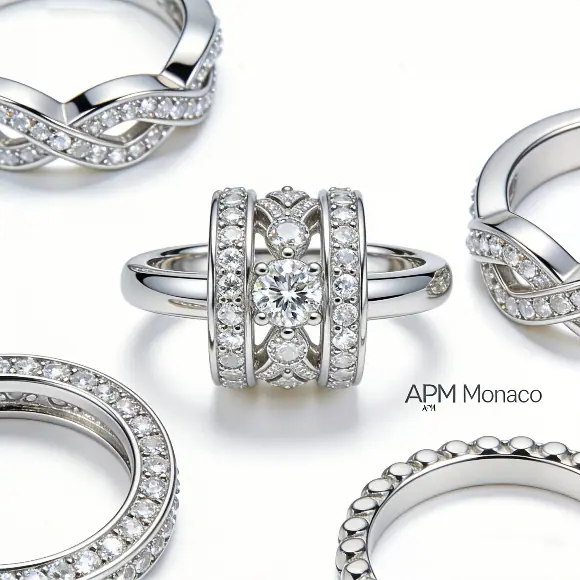
7. Proper Care to Maintain APM Monaco Quality
While APM Monaco’s quality is solid, proper care is essential to maximize the lifespan of its pieces—much like how you’d care for fine silver jewelry. The brand recommends avoiding exposure to water, harsh chemicals (perfumes, lotions, cleaning products), and excessive friction, as these can damage the plating and stones.
Storing pieces in a soft pouch or jewelry box (to prevent scratching) and cleaning them with a dry microfiber cloth (to remove fingerprints and dust) will help retain their shine. For those unsure how to care for silver-plated jewelry, tips similar to how to clean 925 silver can also apply to APM Monaco’s sterling silver pieces, ensuring they stay in top condition.
Final Verdict: Is APM Monaco Good Quality?
To wrap up: Is apm monaco good quality? Yes—APM Monaco offers excellent quality for its price point, especially when compared to other mid-range fashion jewelry brands. Its premium materials, meticulous craftsmanship, rigorous quality control, and two-year warranty all demonstrate a commitment to quality that aligns with its accessible luxury positioning.
While it’s not high-end fine jewelry (and thus not made with precious gemstones or solid gold), APM Monaco’s pieces are designed to be durable, stylish, and long-lasting with proper care. The occasional quality complaints are minor and typical for the segment, and the brand’s customer service often addresses these issues effectively.
For shoppers seeking fashionable, well-crafted jewelry that balances quality and affordability, APM Monaco is a reliable choice. Its quality lives up to its reputation, making it a standout brand in the contemporary fashion jewelry market—proving that you don’t need to spend thousands to own a quality piece of jewelry.
- Is apm monaco worth it - Post Date: 2026-03-25
- Is apm monaco a good brand - Post Date: 2026-03-25
- Is David Morris a luxury brand? Timeless Craftsmanship That Defines Elite Luxury - Post Date: 2026-04-04
- What makes Belperron jewelry unique? Fascinating Design Secrets Collectors Adore - Post Date: 2026-04-04
- Why is Boucheron so Expensive? Craftsmanship & Series That Justify the Price - Post Date: 2026-04-04
- When was Boucheron Founded? Fascinating Historical Origins Revealed - Post Date: 2026-04-04
- Is Boucheron a Luxury Brand? Expert Verdict & Analysis - Post Date: 2026-04-04
- How Much Is Graff Jewelry? Honest Luxury Price Guide - Post Date: 2026-04-03
- Where to Buy Chopard Jewelry? Trusted & Authentic Channels - Post Date: 2026-04-03
- Is Chopard Jewellery Worth It? Honest Luxury Review - Post Date: 2026-04-03
- Why is Cartier so expensive?What is special about Cartier? - Post Date: 2026-03-15
- skyworth tv is what brand?skyworth tv is it easy to use for? - Post Date: 2026-03-11
- Why is Van Cleef so expensive?Is Cartier or Van Cleef cheaper? - Post Date: 2026-03-17
- Why is Graff so expensive?Is Graff a high-end jewelry brand? - Post Date: 2026-03-18
- Is Cartier worth the money?Which is more expensive cartier or bvlgari jewelry? - Post Date: 2026-03-17
- 925 Silver vs Stainless Steel Jewelry - Post Date: 2026-03-20
- Is Bulgari a Luxury Brand?Is Bulgari higher than Cartier? - Post Date: 2026-03-18
- Why is Tiffany so expensive now?Is Tiffany considered a luxury brand? - Post Date: 2026-03-17
- Dreame brand is from which country?Is Dreame owned by Xiaomi? - Post Date: 2026-03-15
- How does the Pigeon brand ensure product safety - Post Date: 2026-03-17
- Fred Force 10 Bracelet Guide: Sizing, Price & Vintage Options - Post Date: 2026-04-05
- Is David Morris a luxury brand? Timeless Craftsmanship That Defines Elite Luxury - Post Date: 2026-04-04
- Who is the designer of Belperron jewelry? The Visionary Who Redefined Luxury - Post Date: 2026-04-04
- What makes Belperron jewelry unique? Fascinating Design Secrets Collectors Adore - Post Date: 2026-04-04
- Is Fred Jewelry under LVMH? Clear Ownership & Brand History Guide - Post Date: 2026-04-04
- Why is Boucheron so Expensive? Craftsmanship & Series That Justify the Price - Post Date: 2026-04-04
- Is Boucheron or Mellerio Older? Fascinating Age Comparison of Iconic Brands - Post Date: 2026-04-04
- When was Boucheron Founded? Fascinating Historical Origins Revealed - Post Date: 2026-04-04
- Is Boucheron a Luxury Brand? Expert Verdict & Analysis - Post Date: 2026-04-04
- Is Damiani a Luxury Brand? A Complete Expert Analysis - Post Date: 2026-04-04