
How much is a cartier ring
Wondering how much is a Cartier ring? Discover full price ranges, popular collections, and key factors that shape the cost of Cartier luxury rings.
How Much Is a Cartier Ring is a key question for anyone shopping for luxury jewelry. Cartier rings are iconic for their timeless design, premium craftsmanship, and strong brand heritage. Prices span a wide range based on the collection, material, diamonds, and style. This guide breaks down the latest price ranges and key details for popular Cartier rings.
Buying a Cartier ring is often a meaningful investment or a special gift. Understanding the price structure helps you set a realistic budget and choose the right piece. Whether you prefer a simple band or a diamond-studded statement ring, Cartier offers options for different tastes and budgets.
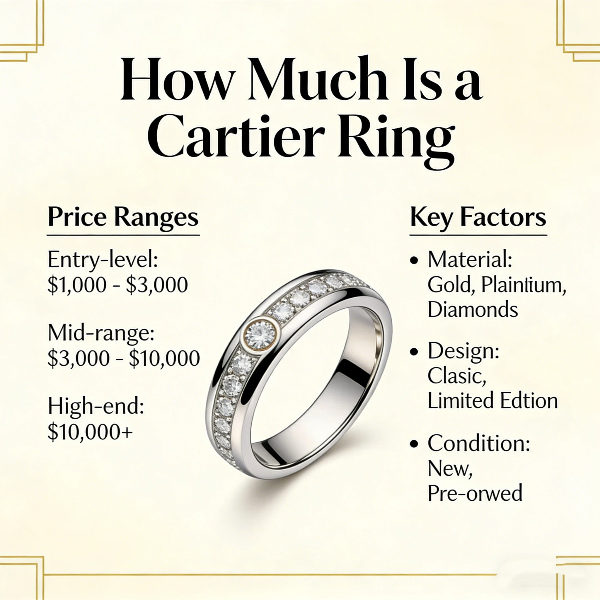
Typical Price Ranges for Cartier Rings
Cartier ring prices start at around $1,900 for basic gold bands and can exceed $50,000 for high-end diamond and solid gold designs. Most popular everyday styles fall between $2,000 and $20,000.
18K gold (yellow, rose, white) is the most common material. Platinum and diamond-set versions cost significantly more. Simple bands are the most affordable, while intricate designs and limited editions carry higher price tags.
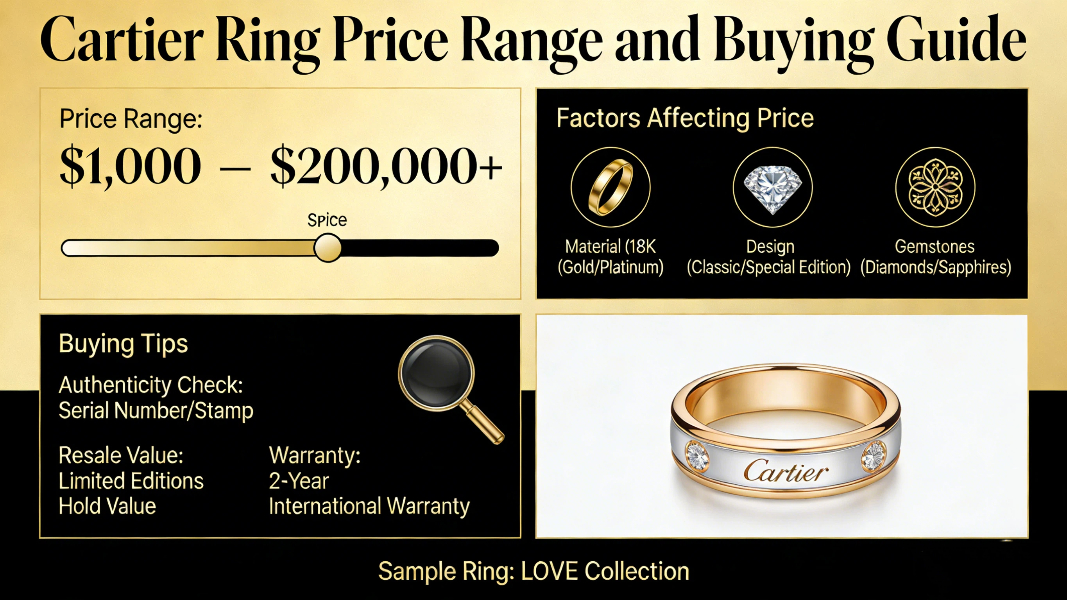
Factors That Affect Cartier Ring Prices
Several elements determine the final cost of a Cartier ring:
– Material: 18K gold, platinum, or precious metals
– Diamond quality: carat, cut, color, and clarity
– Collection and design complexity
– Limited edition or special customization
– Brand heritage and craftsmanship
Top luxury jewelry brands often justify premium pricing through exclusive materials and craftsmanship. Many high-end jewelry brands rely on patented designs and handcrafted techniques to maintain their luxury positioning.
Popular Cartier Ring Collections and Prices
– **Trinity Ring**: Classic three-band design, starts at ~$2,350
– **LOVE Ring**: Iconic screw motif, starts at ~$2,900
– **Juste un Clou**: Nail-inspired design, starts at ~$3,500
– **Panthère de Cartier**: Panther motif, starts at ~$4,200
– **Clash de Cartier**: Modern geometric style, starts at ~$3,800
Diamond and solid gold versions of these models can cost $10,000 to $30,000 or more.
Value and Resale Potential
Cartier rings hold strong resale value and timeless appeal. They are suitable for daily wear, special occasions, and collection. Many buyers view them as long-term assets.
High-quality materials and precise production ensure durability. Like other top luxury brands, Cartier uses premium metals that meet strict industry standards. Top luxury jewelry brands universally prioritize real, high-purity precious metals for their core pieces.
Final Thoughts on How Much Is a Cartier Ring
Cartier rings offer a broad price spectrum to fit various budgets. Entry-level pieces are accessible for new luxury buyers, while premium designs cater to collectors.
The luxury jewelry market is dynamic, with top brands constantly evolving their positioning. Many iconic luxury jewelry brands have undergone strategic transformations to reinforce their high-end status.
You can select a Cartier ring based on your budget, style, and occasion, confident in its quality and lasting value. Whether as an engagement ring, anniversary gift, or everyday luxury, Cartier’s designs balance elegance and investment worth.
- Fred Force 10 Bracelet Guide: Sizing, Price & Vintage Options - Post Date: 2026-04-05
- Is Gorjana Jewelry Good Quality? Full Honest Review 2026 - Post Date: 2026-03-31
- Is Mejuri or Gorjana Better? 2026 Honest & Detailed Comparison Guide - Post Date: 2026-03-31
- Is Buccellati a Luxury Brand? The Honest Luxury Status & Heritage Guide - Post Date: 2026-03-30
- Where Can I Buy Van Cleef and Arpels Jewelry? The Ultimate Safe Buying Guide - Post Date: 2026-03-29
- What Jewelry Is Suitable for Casual Wear: Easy Stylish Picks - Post Date: 2026-03-28
- What Does 750 Mean on Jewelry: Clear Essential Guide - Post Date: 2026-03-28
- What Is the Best Way to Care for Gold Jewelry: Easy & Effective Guide - Post Date: 2026-03-28
- What Does 585 Mean on Jewelry: Clear & Complete Guide - Post Date: 2026-03-27
- How Do You Know If Gold Jewelry Is Real? Simple & Accurate Tests - Post Date: 2026-03-27
- Why is Cartier so expensive?What is special about Cartier? - Post Date: 2026-03-15
- skyworth tv is what brand?skyworth tv is it easy to use for? - Post Date: 2026-03-11
- Why is Van Cleef so expensive?Is Cartier or Van Cleef cheaper? - Post Date: 2026-03-17
- Why is Graff so expensive?Is Graff a high-end jewelry brand? - Post Date: 2026-03-18
- Is Cartier worth the money?Which is more expensive cartier or bvlgari jewelry? - Post Date: 2026-03-17
- 925 Silver vs Stainless Steel Jewelry - Post Date: 2026-03-20
- Is Bulgari a Luxury Brand?Is Bulgari higher than Cartier? - Post Date: 2026-03-18
- Why is Tiffany so expensive now?Is Tiffany considered a luxury brand? - Post Date: 2026-03-17
- Dreame brand is from which country?Is Dreame owned by Xiaomi? - Post Date: 2026-03-15
- How does the Pigeon brand ensure product safety - Post Date: 2026-03-17
- Fred Force 10 Bracelet Guide: Sizing, Price & Vintage Options - Post Date: 2026-04-05
- Is David Morris a luxury brand? Timeless Craftsmanship That Defines Elite Luxury - Post Date: 2026-04-04
- Who is the designer of Belperron jewelry? The Visionary Who Redefined Luxury - Post Date: 2026-04-04
- What makes Belperron jewelry unique? Fascinating Design Secrets Collectors Adore - Post Date: 2026-04-04
- Is Fred Jewelry under LVMH? Clear Ownership & Brand History Guide - Post Date: 2026-04-04
- Why is Boucheron so Expensive? Craftsmanship & Series That Justify the Price - Post Date: 2026-04-04
- Is Boucheron or Mellerio Older? Fascinating Age Comparison of Iconic Brands - Post Date: 2026-04-04
- When was Boucheron Founded? Fascinating Historical Origins Revealed - Post Date: 2026-04-04
- Is Boucheron a Luxury Brand? Expert Verdict & Analysis - Post Date: 2026-04-04
- Is Damiani a Luxury Brand? A Complete Expert Analysis - Post Date: 2026-04-04