
925 Silver vs Gold Plated Jewelry: Which Is Better For You
925 Silver vs Gold Plated Jewelry: Compare durability, appearance, cost, and care to choose the best material for your lifestyle. Learn which is better for daily wear vs occasional use.
925 Silver vs Gold Plated Jewelry is a common dilemma for jewelry lovers choosing everyday pieces, gifting options, or long-term wear accessories. Both materials offer unique aesthetic and practical benefits, and the right choice depends on your style, budget, wear frequency, and care habits. This guide breaks down the key differences between 925 silver and gold plated jewelry, including durability, appearance, cost, and maintenance, to help you make an informed decision. First, it’s important to confirm that 925 sterling silver is genuine silver for long-term value.
Whether you prefer the cool, classic shine of silver or the warm, luxurious glow of gold, knowing the pros and cons of 925 silver vs gold plated jewelry ensures you pick pieces that align with your lifestyle. Neither material is “better” overall—they simply serve different purposes, from daily staple pieces to occasional statement jewelry.
What Is 925 Silver and Gold Plated Jewelry
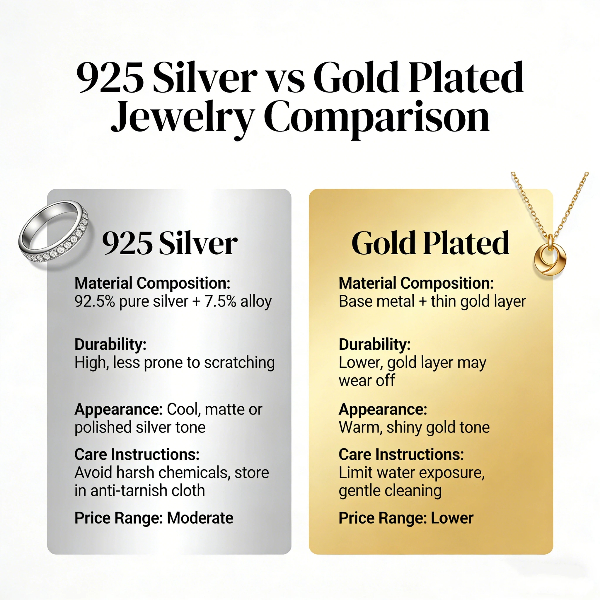
925 sterling silver is a genuine metal alloy made of 92.5% pure silver and 7.5% other metals (usually copper) for added durability. It’s a solid, high-quality material recognized for its timeless shine and hypoallergenic properties for most wearers.
Gold plated jewelry, on the other hand, features a thin layer of real gold (typically 14k, 18k, or 24k) bonded to a base metal like brass, copper, or stainless steel. The gold layer is extremely thin—often just a few microns thick—making it a more affordable way to get the look of solid gold without the cost. Many buyers struggle to tell genuine silver from plated alternatives, and it’s a key factor in choosing wisely. Learning to spot real vs fake 925 silver helps you avoid mistaking plated jewelry for genuine metal.
Durability and Longevity: 925 Silver vs Gold Plated Jewelry
When it comes to long-term wear, 925 silver is far more durable than gold plated jewelry. As a solid metal, it resists peeling, flaking, and wear with proper care—even with daily use, 925 silver pieces can last for years, even decades, developing a unique patina over time that many collectors love.
Gold plated jewelry is much less durable: the thin gold layer wears off over time, especially with frequent contact with skin, moisture, or chemicals. The plating can chip, fade, or peel within months of daily wear, revealing the dull base metal underneath. This makes it a better choice for occasional wear rather than everyday use.
Appearance and Style: Classic Silver vs Warm Gold
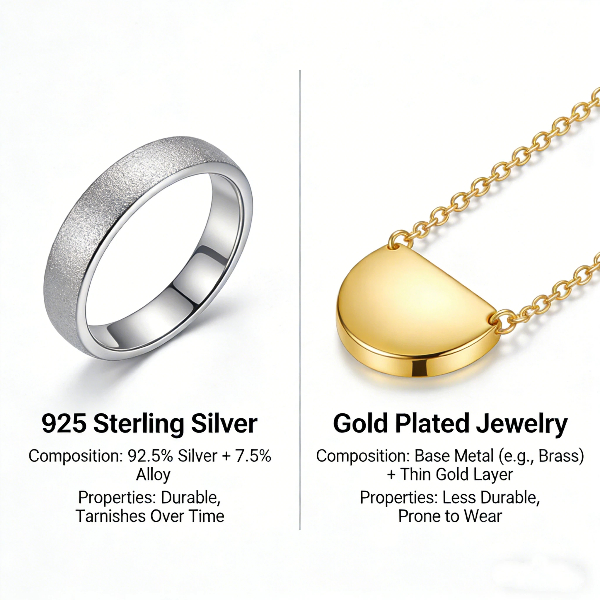
925 silver has a bright, cool, classic shine that pairs with every color and style, from minimalist modern pieces to vintage-inspired designs. It’s a versatile choice for casual, formal, and everyday wear, and its natural patina can add character to older pieces.
Gold plated jewelry offers the rich, warm glow of solid gold, making it perfect for creating a luxurious look on a budget. It’s ideal for special occasions, layered jewelry styles, or anyone who loves gold’s timeless aesthetic but doesn’t want to invest in solid gold. The finish can range from pale yellow to deep rose gold, matching all solid gold color options.
Cost and Value: Affordability vs Long-Term Investment
925 silver is a mid-range material—more affordable than solid gold but more expensive than gold plated jewelry. It offers good value for money, as it’s a genuine metal that holds its value and can be polished or restored if it tarnishes.
Gold plated jewelry is the most budget-friendly option for gold-toned jewelry, with prices a fraction of solid gold or even 925 silver. However, it has little to no resale value, as the gold layer is too thin to recover, and once the plating wears off, the piece is often discarded or re-plated at an additional cost.
Comfort and Wearability: Hypoallergenic vs Base Metal Risks
A key benefit of 925 silver is its hypoallergenic nature for most people, making it a great choice for those with sensitive skin or metal allergies. The pure silver content minimizes irritation, even with all-day wear.
Gold plated jewelry, by contrast, can cause irritation when the thin gold layer wears off, exposing the nickel or brass base metal underneath—these metals are common allergens for many wearers. Understanding 925 silver’s hypoallergenic properties is a big plus for daily wear.
Maintenance and Care: Tarnish vs Plating Protection
925 silver requires regular care to prevent tarnish—simple habits like wiping with a soft cloth after wear, storing in an airtight container, and avoiding moisture and chemicals keep it shiny. Tarnish is easy to remove with household cleaners or silver polish, and the metal itself never wears out.
Gold plated jewelry requires even more careful maintenance to preserve the thin gold layer. Avoid contact with water, sweat, perfume, lotion, and cleaning products, and remove it before showering, swimming, or exercising. Once the plating wears off, it can be re-plated, but this process adds to the overall cost over time.
Final Thoughts on 925 Silver vs Gold Plated Jewelry
Choosing between 925 silver and gold plated jewelry comes down to your lifestyle, budget, and wear goals. 925 silver is the best choice for **daily wear, long-term use, and value**—it’s durable, versatile, hypoallergenic, and a genuine metal that stands the test of time with minimal care.
Gold plated jewelry is perfect for **occasional wear, budget-friendly gold style, and trendy pieces**—it lets you enjoy gold’s aesthetic without the high cost, making it great for gifting or trying new jewelry trends. Whichever you choose, proper care will extend the life of your pieces and keep them looking their best for as long as possible.
- Does Gold Plated Jewelry Tarnish? The Honest Answer (2026) - Post Date: 2026-03-27
- Can Salt Water Ruin 925 Silver Jewelry - Post Date: 2026-03-22
- Is 925 Silver A Precious Metal - Post Date: 2026-03-22
- Fake Silver vs Real 925 Silver - Post Date: 2026-03-21
- Can You Fix Blackened 925 Silver Jewelry - Post Date: 2026-03-21
- Can I Clean My 925 Silver While Showering - Post Date: 2026-03-21
- How To Prevent 925 Silver From Tarnishing - Post Date: 2026-03-21
- How To Clean Tarnished 925 Silver At Home - Post Date: 2026-03-21
- Can I Wear 925 Silver In The Hot Tub - Post Date: 2026-03-21
- Can You Swim With 925 Silver Jewelry - Post Date: 2026-03-20
- Why is Cartier so expensive?What is special about Cartier? - Post Date: 2026-03-15
- skyworth tv is what brand?skyworth tv is it easy to use for? - Post Date: 2026-03-11
- Why is Van Cleef so expensive?Is Cartier or Van Cleef cheaper? - Post Date: 2026-03-17
- Why is Graff so expensive?Is Graff a high-end jewelry brand? - Post Date: 2026-03-18
- Is Cartier worth the money?Which is more expensive cartier or bvlgari jewelry? - Post Date: 2026-03-17
- 925 Silver vs Stainless Steel Jewelry - Post Date: 2026-03-20
- Is Bulgari a Luxury Brand?Is Bulgari higher than Cartier? - Post Date: 2026-03-18
- Why is Tiffany so expensive now?Is Tiffany considered a luxury brand? - Post Date: 2026-03-17
- Dreame brand is from which country?Is Dreame owned by Xiaomi? - Post Date: 2026-03-15
- How does the Pigeon brand ensure product safety - Post Date: 2026-03-17
- Is David Morris a luxury brand? Timeless Craftsmanship That Defines Elite Luxury - Post Date: 2026-04-04
- Who is the designer of Belperron jewelry? The Visionary Who Redefined Luxury - Post Date: 2026-04-04
- What makes Belperron jewelry unique? Fascinating Design Secrets Collectors Adore - Post Date: 2026-04-04
- Is Fred Jewelry under LVMH? Clear Ownership & Brand History Guide - Post Date: 2026-04-04
- Why is Boucheron so Expensive? Craftsmanship & Series That Justify the Price - Post Date: 2026-04-04
- Is Boucheron or Mellerio Older? Fascinating Age Comparison of Iconic Brands - Post Date: 2026-04-04
- When was Boucheron Founded? Fascinating Historical Origins Revealed - Post Date: 2026-04-04
- Is Boucheron a Luxury Brand? Expert Verdict & Analysis - Post Date: 2026-04-04
- Is Damiani a Luxury Brand? A Complete Expert Analysis - Post Date: 2026-04-04
- How much is Graff Diamonds worth? Honest Value Breakdown - Post Date: 2026-04-04