
Is cartier cheaper in europe
Is Cartier cheaper in Europe? Learn about pricing, VAT refunds, savings, and the best countries to buy authentic Cartier at the best price.
Many luxury shoppers wonder **Is Cartier Cheaper in Europe** when planning a purchase. As a European luxury brand, Cartier often has lower base pricing in Europe plus VAT refunds for international visitors, creating real savings compared to the US, Asia, and other regions. This guide explains pricing, tax refunds, and how much you can save.
If you’re buying a LOVE bracelet, ring, watch, or jewelry, understanding European pricing helps you save hundreds or even thousands of dollars. Many travelers choose to buy Cartier in Europe to get the best possible price.
Why Is Cartier Cheaper in Europe
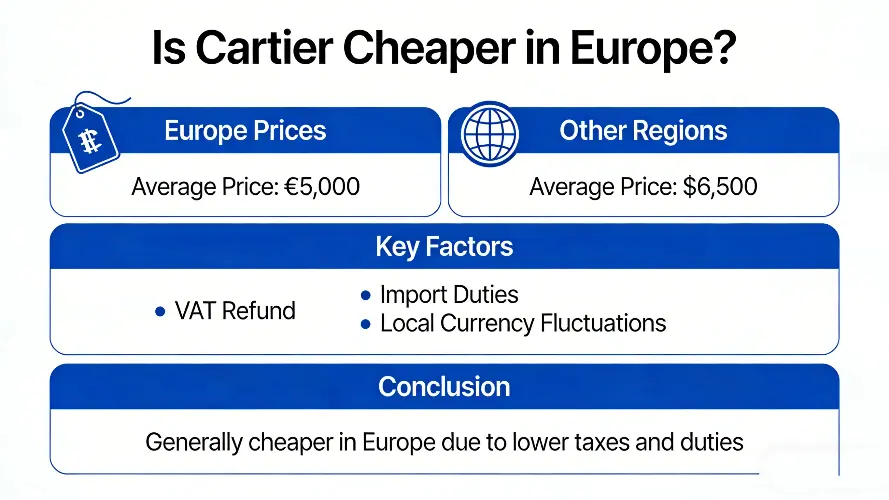
Cartier is a French brand headquartered in Paris, so products sold in Europe avoid extra import taxes, shipping markups, and regional surcharges found in other countries. Base retail prices are lower before any discounts or refunds.
Non-EU visitors can also claim a VAT refund, usually 10%–15% of the purchase price. This combination makes Europe one of the most affordable places to buy authentic Cartier.
How Much Cheaper Is Cartier in Europe
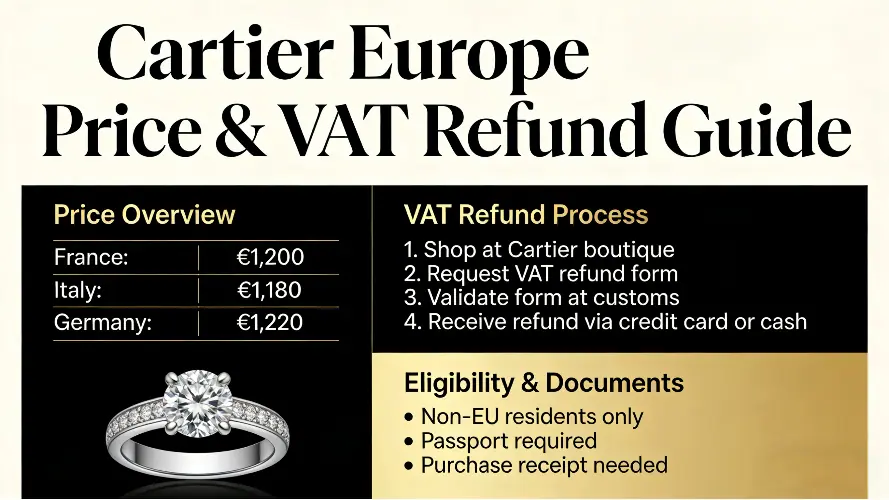
In most cases, Cartier is **10%–25% cheaper** in Europe after VAT refund, compared to prices in the United States, China, Australia, and Southeast Asia.
Exact savings depend on:
– Country VAT rate
– VAT refund percentage
– Currency exchange rates
– Specific Cartier product
Popular pieces like the LOVE bracelet, Trinity ring, and Panthère items often see the clearest price differences.
VAT Refund Rules for Buying Cartier in Europe
To get a tax refund on your Cartier purchase, you must meet basic rules:
– You are a non-EU resident
– You buy for personal use, not resale
– You meet the minimum spend in one store
– You export the items within the allowed time
– You complete customs validation at departure
Most European countries offer a **10%–15% net refund** after small administrative fees. Cartier boutiques fully support tax-free paperwork.
Best European Countries to Buy Cartier
France, Italy, and the UK are among the best countries for low Cartier pricing and easy VAT refunds. These nations have high tourist tax refund support and stable pricing.
Local Cartier boutiques provide bilingual help for international shoppers, making the purchase and refund process simple.
Price Comparison: Europe vs Other Regions
US buyers typically save 15%–25% on Cartier in Europe after refund. Asian buyers often save even more due to high import duties and regional retail markups in their home countries.
Even with travel costs, buying Cartier in Europe is worthwhile for shoppers already visiting the region. Understanding the value helps you decide if a European purchase is a smart investment.
Tips to Get the Lowest Price on Cartier in Europe
– Shop at official Cartier boutiques for authenticity
– Ask for tax-free paperwork at checkout
– Compare exchange rates before paying
– Keep all receipts and refund forms
– Process customs validation before leaving the EU
Following these steps ensures you get the lowest legal price and avoid counterfeit risks. Other European luxury brands use similar pricing and tax refund structures.
Final Thoughts: Is Cartier Cheaper in Europe
Yes, **Cartier is cheaper in Europe** for most international buyers, thanks to lower base prices and tourist VAT refunds. Savings range from 10% to 25% depending on the country and product.
If you’re traveling to Europe, buying Cartier is a smart way to save. For shoppers not visiting Europe, local prices may be more convenient despite costing slightly more.
Understanding regional pricing helps you make a confident buying decision. Many European luxury brands follow similar global pricing strategies.
- Is Gorjana Jewelry Good Quality? Full Honest Review 2026 - Post Date: 2026-03-31
- Is Mejuri or Gorjana Better? 2026 Honest & Detailed Comparison Guide - Post Date: 2026-03-31
- Is Buccellati a Luxury Brand? The Honest Luxury Status & Heritage Guide - Post Date: 2026-03-30
- Where Can I Buy Van Cleef and Arpels Jewelry? The Ultimate Safe Buying Guide - Post Date: 2026-03-29
- What Jewelry Is Suitable for Casual Wear: Easy Stylish Picks - Post Date: 2026-03-28
- What Does 750 Mean on Jewelry: Clear Essential Guide - Post Date: 2026-03-28
- What Is the Best Way to Care for Gold Jewelry: Easy & Effective Guide - Post Date: 2026-03-28
- What Does 585 Mean on Jewelry: Clear & Complete Guide - Post Date: 2026-03-27
- How Do You Know If Gold Jewelry Is Real? Simple & Accurate Tests - Post Date: 2026-03-27
- What is Gold Filled Jewelry: Complete Guide 2026 - Post Date: 2026-03-27
- Why is Cartier so expensive?What is special about Cartier? - Post Date: 2026-03-15
- skyworth tv is what brand?skyworth tv is it easy to use for? - Post Date: 2026-03-11
- Why is Van Cleef so expensive?Is Cartier or Van Cleef cheaper? - Post Date: 2026-03-17
- Why is Graff so expensive?Is Graff a high-end jewelry brand? - Post Date: 2026-03-18
- Is Cartier worth the money?Which is more expensive cartier or bvlgari jewelry? - Post Date: 2026-03-17
- 925 Silver vs Stainless Steel Jewelry - Post Date: 2026-03-20
- Is Bulgari a Luxury Brand?Is Bulgari higher than Cartier? - Post Date: 2026-03-18
- Why is Tiffany so expensive now?Is Tiffany considered a luxury brand? - Post Date: 2026-03-17
- Dreame brand is from which country?Is Dreame owned by Xiaomi? - Post Date: 2026-03-15
- How does the Pigeon brand ensure product safety - Post Date: 2026-03-17
- How much are Mikimoto pearls worth? A Complete Value Breakdown - Post Date: 2026-04-02
- Are Mikimoto pearls valuable? A Complete Guide to Their Worth - Post Date: 2026-04-02
- Are Mikimoto pearls worth it? The Ultimate Luxury Pearl Investment Guide - Post Date: 2026-04-02
- Why are Mikimoto so expensive? The Iconic Luxury Pearl Legacy - Post Date: 2026-04-01
- What is the history of TASAKI? 2026 Complete Guide to the Japanese Pearl Brand - Post Date: 2026-04-01
- Is TASAKI a Good Brand? 2026 Guide to Japanese Pearl Luxury - Post Date: 2026-04-01
- What makes Fred jewelry unique? 2026 French Luxury Brand Guide - Post Date: 2026-04-01
- Is Fred jewelry worth it? 2026 Luxury Value & French Craftsmanship Guide - Post Date: 2026-04-01
- Which country made Fred jewelry? The Complete French Luxury Story 2026 - Post Date: 2026-04-01
- Why are diamonds so expensive De Beers? Honest 2026 Market Impact Guide - Post Date: 2026-04-01