
How much is mikimoto pearl necklace
How much is mikimoto pearl necklace? Learn the full price range from entry-level Akoya to luxury South Sea pieces, plus key cost factors and buying tips.
Many luxury jewelry enthusiasts and pearl lovers ask the key question: How much is mikimoto pearl necklace? As the iconic Japanese brand that revolutionized cultured pearl jewelry, Mikimoto is synonymous with exceptional quality, timeless design, and unparalleled craftsmanship. Understanding the price range of a Mikimoto pearl necklace helps you navigate the brand’s exquisite collections and select the perfect piece that aligns with your budget and style.
Mikimoto pearl necklaces span from elegant everyday essentials to high-jewelry masterpieces, with prices determined by pearl type, size, luster, surface quality, metal setting, and diamond accents. No matter the price point, every Mikimoto necklace embodies the brand’s century-old legacy of perfection, making them coveted pieces for special occasions, heirlooms, and personal style statements.
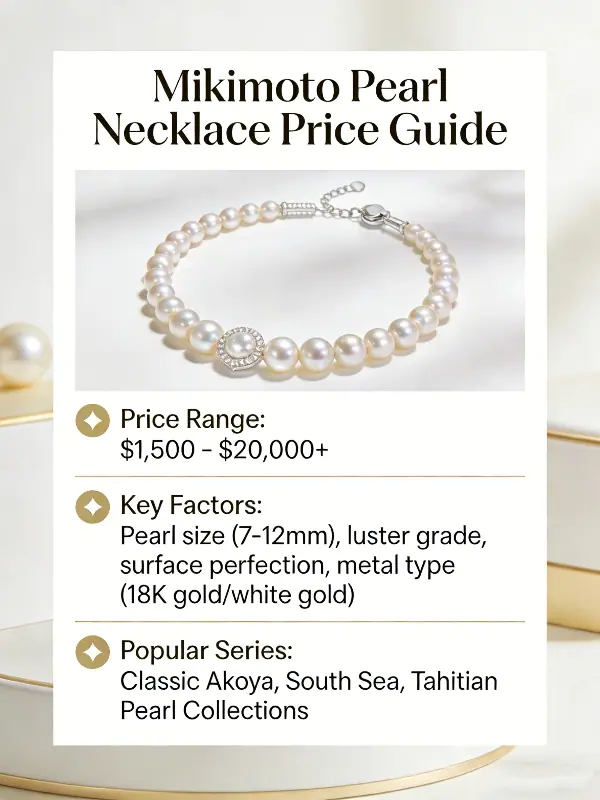
Entry-Level Mikimoto Pearl Necklace Price Range
The most accessible Mikimoto pearl necklaces feature classic Akoya cultured pearls, designed for daily wear and versatile styling. These entry-level pieces start at around $2,500 and typically go up to $5,000. They showcase the brand’s signature high-luster Akoya pearls in sleek 18K gold or silver settings, offering authentic Mikimoto quality at a more approachable price.
Even at the entry level, Mikimoto does not compromise on pearl selection or craftsmanship, ensuring each necklace delivers the iconic smoothness and radiance the brand is famous for. These pieces are perfect for first-time buyers or those looking to add a subtle luxury pearl necklace to their collection.
Mid-Range Mikimoto Pearl Necklaces
The most popular category for shoppers asking How much is mikimoto pearl necklace is the mid-range collection, which ranges from $5,000 to $25,000. This range includes beloved styles such as single-strand Akoya necklaces with diamond accents, two-row pearl designs, and convertible pieces that transition from day to night.
Most mid-range Mikimoto necklaces feature Akoya pearls ranging from 7mm to 8.5mm, with exceptional luster and clean surfaces. The brand’s Classic and M Code collections fall into this price bracket, offering a perfect balance of elegance, versatility, and investment value for discerning buyers.
High-End Mikimoto Luxury Pearl Necklaces
For those seeking extraordinary luxury and rarity, high-end Mikimoto pearl necklaces cost from $25,000 to well over $2,000,000. These pieces feature large, rare pearls such as White South Sea, Golden South Sea, and Black South Sea cultured pearls, often paired with rare colored gemstones and intricate diamond settings that represent the pinnacle of fine jewelry artistry.
Exceptional pearls with perfect roundness, deep luster, and minimal blemishes drive prices significantly higher, with one-of-a-kind high-jewelry necklaces often reaching seven figures. These necklaces are considered investment pieces and are highly valued by collectors and luxury connoisseurs worldwide.
Key Factors That Determine the Cost of a Mikimoto Pearl Necklace
When answering How much is mikimoto pearl necklace, several core factors influence pricing. The most critical is pearl quality, including type (Akoya, South Sea, Tahitian), size, luster, surface cleanliness, and shape. Larger, rounder, and more lustrous pearls command a substantial premium.
Design complexity and craftsmanship also play a major role, as handcrafted settings, pavé diamonds, and custom details require extensive skill and time. The metal used—primarily 18K gold, platinum, and silver—adds to the value, as does the inclusion of rare gemstones in high-jewelry designs.
Mikimoto’s global reputation for luxury and heritage also contributes to pricing, much like the premium standards behind luxury jewelry valuation that reflects rarity, artistry, and legacy.
Mikimoto Pearl Necklace Collections and Price Points
Mikimoto offers diverse collections tailored to different tastes and budgets, each with distinct price points. The Classic Collection features timeless single-strand Akoya necklaces, starting at $3,500. The M Code Collection offers modern, convertible designs ranging from $7,000 to $15,000. The Premium and Reserve Collections showcase rare South Sea pearls, with prices starting at $36,000 and exceeding $100,000 for limited-edition pieces.
Each collection upholds Mikimoto’s strict quality control, ensuring every necklace meets the brand’s exacting standards for beauty, durability, and elegance.
Pre-Owned Mikimoto Pearl Necklace Options
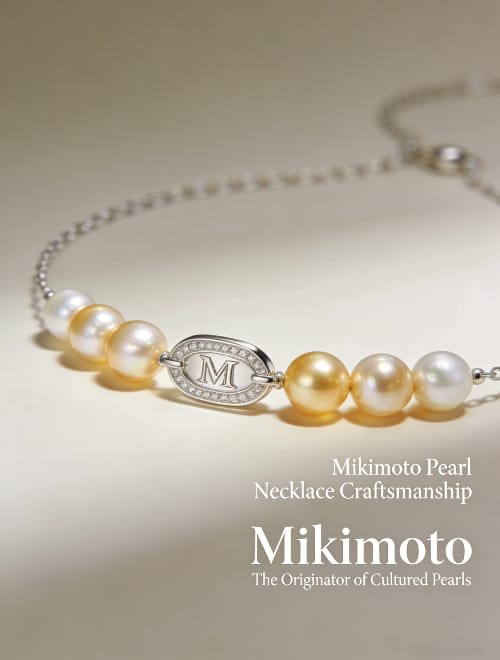
For shoppers looking for exceptional value, pre-owned Mikimoto pearl necklaces offer a more affordable way to own the brand’s iconic pieces, with prices typically 30–50% lower than retail. Entry-level pre-owned Akoya necklaces can start at $1,800, while mid-range styles often fall between $3,500 and $18,000.
Buying pre-owned is a smart choice for budget-focused buyers, as long as you purchase from authorized and reputable sellers to ensure authenticity and condition. Pre-owned Mikimoto necklaces still maintain the brand’s exceptional quality and timeless beauty, making them a great alternative to new pieces.
Why Mikimoto Pearl Necklaces Are Worth the Investment
Mikimoto pearl necklaces are more than just jewelry—they are long-term investments in beauty, craftsmanship, and heritage. The brand uses only the finest cultured pearls, sourced from its own pearl farms and selected by master pearl graders for exceptional luster and perfection.
Each necklace is crafted by skilled artisans with extreme attention to detail, ensuring every piece meets Mikimoto’s legendary standards. Mikimoto pearls also hold their value exceptionally well over time, making them both a meaningful and practical luxury purchase. The brand’s timeless designs ensure that a Mikimoto pearl necklace remains elegant and desirable for generations, just like premium diamond jewelry maintenance that stands the test of time.
Final Thoughts on How much is mikimoto pearl necklace
To answer the question clearly: How much is mikimoto pearl necklace? Prices start at around $2,500 for entry-level Akoya necklaces and go up to millions for rare high-jewelry South Sea pearl masterpieces. Most popular necklaces fall between $5,000 and $25,000, offering the perfect balance of luxury, versatility, and accessibility.
Whether you choose an everyday classic, a modern convertible design, or a rare high-jewelry statement piece, a Mikimoto pearl necklace represents unmatched quality, beauty, and legacy. For anyone seeking the finest cultured pearl jewelry in the world, Mikimoto remains the gold standard of excellence.
Caring for your Mikimoto pearl necklace properly will preserve its luster and value, just like maintaining proper jewelry sizing and care with gentle and regular maintenance.
- Where can I sell my Mikimoto pearls? Proven Top 4 Trusted Resale Options - Post Date: 2026-04-03
- What is the difference between Akoya and Mikimoto pearls? Clear Breakdown - Post Date: 2026-04-03
- What is special about Mikimoto pearls? Their Unmatched Excellence - Post Date: 2026-04-03
- Is Mikimoto a luxury brand? The Definitive Luxury Jewelry Guide - Post Date: 2026-04-02
- Is it cheaper to buy Mikimoto pearls in Japan? A Complete Price Guide - Post Date: 2026-04-02
- How to clean Mikimoto pearls? The Safe Luxury Pearl Care Guide - Post Date: 2026-04-02
- How much is the Mikimoto crown? The Ultimate Luxury Crown Price Guide - Post Date: 2026-04-02
- Does Mikimoto ever go on sale? The Truth About Luxury Pearl Discounts - Post Date: 2026-04-02
- Is Mikimoto cheaper in Japan? A Complete Price Comparison Guide - Post Date: 2026-04-02
- Why are Mikimoto pearls so expensive? The Luxury Pearl Price Breakdown - Post Date: 2026-04-02
- Why is Cartier so expensive?What is special about Cartier? - Post Date: 2026-03-15
- skyworth tv is what brand?skyworth tv is it easy to use for? - Post Date: 2026-03-11
- Why is Van Cleef so expensive?Is Cartier or Van Cleef cheaper? - Post Date: 2026-03-17
- Why is Graff so expensive?Is Graff a high-end jewelry brand? - Post Date: 2026-03-18
- Is Cartier worth the money?Which is more expensive cartier or bvlgari jewelry? - Post Date: 2026-03-17
- 925 Silver vs Stainless Steel Jewelry - Post Date: 2026-03-20
- Is Bulgari a Luxury Brand?Is Bulgari higher than Cartier? - Post Date: 2026-03-18
- Why is Tiffany so expensive now?Is Tiffany considered a luxury brand? - Post Date: 2026-03-17
- Dreame brand is from which country?Is Dreame owned by Xiaomi? - Post Date: 2026-03-15
- How does the Pigeon brand ensure product safety - Post Date: 2026-03-17
- Fred Force 10 Bracelet Guide: Sizing, Price & Vintage Options - Post Date: 2026-04-05
- Is David Morris a luxury brand? Timeless Craftsmanship That Defines Elite Luxury - Post Date: 2026-04-04
- Who is the designer of Belperron jewelry? The Visionary Who Redefined Luxury - Post Date: 2026-04-04
- What makes Belperron jewelry unique? Fascinating Design Secrets Collectors Adore - Post Date: 2026-04-04
- Is Fred Jewelry under LVMH? Clear Ownership & Brand History Guide - Post Date: 2026-04-04
- Why is Boucheron so Expensive? Craftsmanship & Series That Justify the Price - Post Date: 2026-04-04
- Is Boucheron or Mellerio Older? Fascinating Age Comparison of Iconic Brands - Post Date: 2026-04-04
- When was Boucheron Founded? Fascinating Historical Origins Revealed - Post Date: 2026-04-04
- Is Boucheron a Luxury Brand? Expert Verdict & Analysis - Post Date: 2026-04-04
- Is Damiani a Luxury Brand? A Complete Expert Analysis - Post Date: 2026-04-04